






Geometry Dash is one of the most iconic rhythm-based platformers ever created, famous for its fast-paced gameplay and deceptively simple mechanics. While its vibrant levels and custom community creations attract millions of players worldwide, the true challenge lies in mastering timing and rhythm. Every jump, slide, and dash must align with the beat of the background music. Without precision, even the easiest levels can feel impossible.
In this guide, we’ll dive deep into understanding how timing and rhythm shape Geometry Dash. You’ll learn techniques for syncing actions with music, training strategies, and advanced tips for tackling some of the hardest levels in the game. Whether you’re a beginner struggling with your first jumps or an advanced player grinding Demon levels, this complete guide will help sharpen your rhythm skills and elevate your gameplay.
1. Understanding the Role of Rhythm in Geometry Dash
At its core, Geometry Dash is a rhythm platformer. Unlike other platform games that rely purely on reaction time, Geometry Dash blends timing with musical synchronization. The background soundtrack is not just decoration—it’s the foundation of each level.
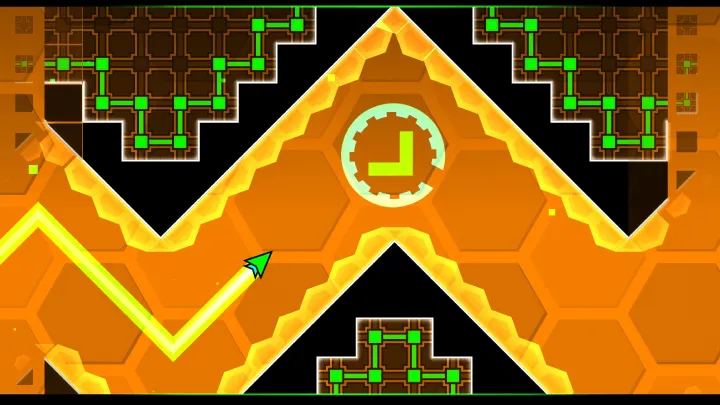
Every obstacle, spike, and platform is often designed to match the beats, drops, and melodies of the music track. When a player learns to listen and react to the rhythm instead of only watching the visuals, success becomes more consistent. Rhythm gives you a roadmap, guiding your jumps and movements through otherwise chaotic patterns.
Why Rhythm Matters
- Predictability: Music helps you anticipate the next move.
- Flow: Playing to the beat creates smoother gameplay.
- Focus: Syncing with music reduces panic in fast-paced levels.
2. Timing Basics: Jumps, Holds, and Releases
Timing is the mechanical backbone of Geometry Dash. Players must execute three core actions—tapping for jumps, holding for long arcs, and releasing at precise beats.
A single mistimed tap can ruin an otherwise perfect run. For example, tapping too early might send you colliding with a spike, while tapping too late might cause you to fall into a pit. Consistency in pressing, holding, and releasing is the key to beating every level.
Mastering Jump Types
- Short Taps – Quick presses that give small, tight jumps.
- Hold Jumps – Longer presses that extend arcs across large gaps.
- Release Jumps – Letting go at the right beat to land on platforms safely.
By practicing each of these separately in Practice Mode, players build a foundation for more advanced rhythm-based maneuvers.
3. Listening vs. Looking: Using Music as a Guide
Many new players rely too much on visuals, watching spikes and platforms instead of listening to the beat. However, advanced Geometry Dash players know that the soundtrack is often more reliable than visuals.
When the music drops or changes tempo, level design usually shifts to match it. Fast beats may mean rapid taps, while a slower melody might suggest long holds. Training yourself to “play with your ears” creates a second layer of awareness that prevents surprises.
Tips for Playing with Sound
- Always play with headphones for better rhythm detection.
- Lower visual distractions (turn off background effects if possible).
- Memorize sound cues like snare hits, bass drops, or claps.
4. Practice Mode: Building Muscle Memory
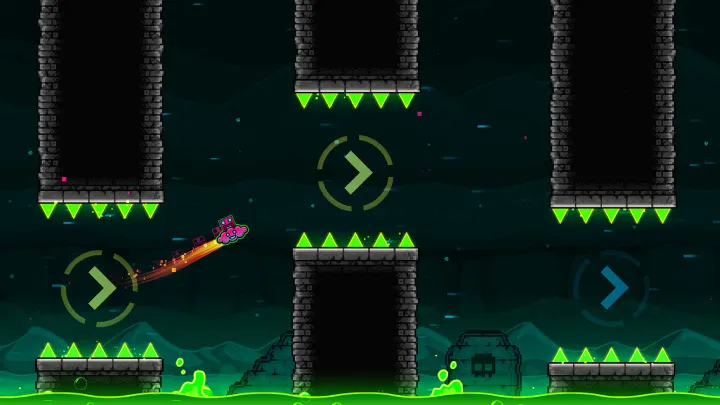
Geometry Dash includes a Practice Mode for a reason—it’s the ultimate training tool for rhythm and timing mastery. In this mode, checkpoints can be placed anywhere, allowing you to retry tricky parts repeatedly.
By isolating tough sections, you train your brain and fingers to move in sync with the beat. Over time, your muscle memory takes over, allowing you to complete entire levels with smooth consistency.
How to Use Practice Mode Effectively
- Set checkpoints before difficult jumps.
- Repeat the same section 10–20 times.
- Play with music on to reinforce rhythm.
- Gradually remove checkpoints until you can pass without them.
5. Mastering Level Patterns and Beat Mapping
Every level in Geometry Dash is designed with patterns tied to the soundtrack. Understanding beat mapping—the alignment of level obstacles with musical beats—gives players a predictive advantage.
For example, spikes might appear every fourth beat, or platforms may line up with the melody. Once you recognize these patterns, you can “pre-play” moves in your head before they happen, relying less on reaction and more on anticipation.
Common Patterns in Levels
- Quarter-beat jumps (fast tapping sequences).
- Half-beat holds (longer arcs).
- Drop-to-drop transitions (music drops aligning with portals).
6. Training Reaction Time with Rhythm
Timing in Geometry Dash is not just about tapping to music—it’s also about reacting fast when beats speed up. Higher difficulty levels like Insane or Demon require lightning-fast reflexes, often pushing players to their limits.
Training reaction speed involves combining listening skills with finger agility. The better your rhythm sense, the less your brain has to “think” about when to jump—it becomes automatic.
Training Exercises
- Play slower levels to master accuracy before moving to faster ones.
- Use a metronome app to practice tapping at different BPMs.
- Challenge yourself with user-created rhythm-heavy levels.
7. Syncing Visual Cues with Musical Cues
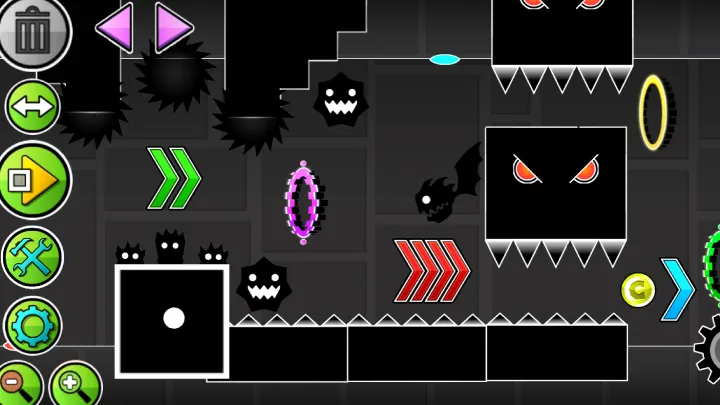
While rhythm is the core, visuals cannot be ignored. The strongest Geometry Dash players sync visual memory with audio rhythm, creating a dual safety net.
For example, you might recognize a glowing platform visually while also knowing it aligns with a specific drum beat. This dual awareness dramatically reduces mistakes.
Best Practices
- Watch replays to connect visuals with audio.
- Use color-coded levels or custom backgrounds to highlight tricky spots.
- Train yourself to recognize repeating patterns in both visuals and beats.
8. Advanced Rhythm Techniques for Demon Levels
Demon levels are infamous for requiring near-perfect rhythm control. At this difficulty, players cannot rely on visuals alone. Advanced techniques become essential:
Techniques
- Pre-tap anticipation – Jumping slightly ahead of the beat in faster levels.
- Double-tap rhythm – Tapping twice in quick succession to sync with rapid beats.
- Hold-release precision – Perfectly aligning holds with long sustained notes.
Example Demon-Level Rhythm Challenges
- Rapid spike sequences tied to drum fills.
- Syncing portals with sudden tempo changes.
- Long stretches requiring both visual memorization and musical intuition.
9. Common Timing Mistakes and How to Avoid Them
Even skilled players often make mistakes. The good news is that most errors in Geometry Dash come from predictable timing issues.
Common Mistakes
- Jumping too early: Impatience causes premature taps.
- Ignoring the beat: Over-relying on visuals instead of rhythm.
- Holding too long: Leads to overshooting platforms.
How to Fix Them
- Practice with slower songs to refine timing.
- Record and review your runs to identify weak spots.
- Use tapping drills outside the game (apps, rhythm trainers).
10. Building Long-Term Rhythm Mastery
Timing and rhythm in Geometry Dash aren’t skills mastered overnight—they develop through long-term training and repetition. Consistency, patience, and persistence are key.
Long-Term Training Plan
- Spend 15–20 minutes daily in Practice Mode.
- Alternate between easy levels and harder challenges.
- Focus on listening, not just looking.
- Gradually attempt harder levels as rhythm improves.
Over weeks or months, players notice dramatic improvements. What once felt impossible becomes second nature, as rhythm and timing skills solidify permanently.
Conclusion
Geometry Dash isn’t just about jumping and dodging—it’s about entering a flow state where music and movement merge. Mastering timing and rhythm transforms the game from frustrating chaos into a smooth, almost artistic experience. By using Practice Mode, focusing on beat mapping, and syncing both audio and visuals, players can dramatically improve their performance. Whether you’re tackling your first level or grinding through Demons, the strategies in this guide will help you stay in sync, on beat, and in control.