



Introduction
NARAKA: BLADEPOINT separates itself from other battle royale games with its intricate melee combat system. At the heart of this combat lies the parry and counter system—a dynamic mechanic that adds layers of strategy, reaction timing, and psychological warfare to each encounter. While it may appear straightforward—parry charged attacks, punish mistakes—it’s far more complex in practice. This article explores the parry and counter system in detail: how it works, how to master it, how top players use it, and why it can be both a powerful tool and a fatal trap.
Understanding the Core Mechanics
Before learning how to parry effectively, it’s crucial to understand how the system functions within NARAKA’s rock-paper-scissors structure.
Parrying in NARAKA is primarily a response to charged attacks. When a player holds their weapon attack button, they initiate a blue focus or gold focus attack depending on the weapon and input. These are powerful moves, but they’re susceptible to being parried. Parrying is done by pressing the counter button—often bound to F or RB/LB—at the exact moment your opponent’s focus attack lands.
A successful parry stuns the enemy, opens them up for a disarm punish, and potentially leads to a high-damage combo or execution. It’s the ultimate turnaround mechanic—but also one that demands precise timing and anticipation.
Timing the Parry: Reaction vs Prediction
The greatest challenge with parrying is knowing when to activate it. There are two major schools of thought: reaction-based and prediction-based parrying.
Reaction-based parrying relies on fast reflexes. You visually identify when your opponent starts a blue or gold focus attack, then quickly hit your counter key. This works best when facing slower weapons like Greatswords or Spears, where the charge-up is more telegraphed.
Prediction-based parrying, on the other hand, involves reading your opponent’s intentions before they act. If you know a player likes to open with a charged heavy, you preemptively counter at the likely time. This is risky—if you guess wrong, you're left vulnerable—but it can also be more reliable against fast weapons like Daggers or Katanas.
Top players blend both techniques. They observe patterns over the course of a match and bait out attacks to trigger parries at just the right moment.
Disarming and the Counter Window
One of the most powerful aspects of a successful parry is the disarm effect. This temporarily knocks your opponent’s weapon from their hands, leaving them defenseless.
The timing after a successful parry is called the counter window. In this brief window, you can land a guaranteed follow-up combo—or even chain into your ultimate ability. The disarm forces enemies to either retreat, grapple away, or attempt to re-equip their weapon mid-fight, which is usually fatal.
However, this mechanic also introduces a mind game. Savvy players may fake a focus attack to bait a premature parry, then punish with a grab, normal attack, or ability. You must weigh whether it’s worth going for the parry and opening yourself to being baited.
Weapon Matchups and Parry Difficulty
Not all weapons are equal when it comes to parry interactions. Some are harder to parry due to speed or animation tricks.
Easier to parry weapons:
- Greatsword
- Spear
- Pole Sword
- These weapons have noticeable wind-up animations, making them ideal targets for reaction parries.
Harder to parry weapons:
- Dagger
- Katana
- Nunchucks
- These strike faster, often mixed with cancels and feints, making parrying a real gamble unless you can read the player.
Learning weapon-specific cues is critical. Each charged attack has a sound cue and animation that can be learned over time. Spend time in training mode observing these frames for each weapon type.
The Psychology of Baiting Counters
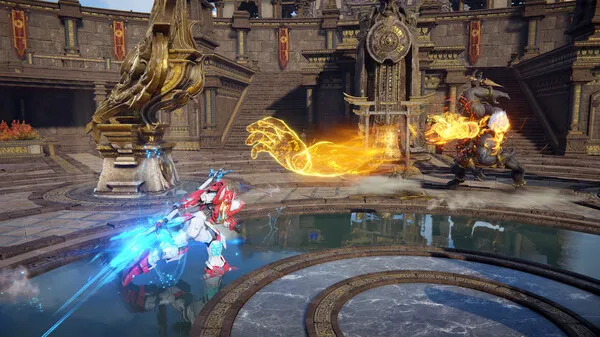
An advanced layer of the system lies in baiting your opponent’s parry and punishing them for it. This is where high-level mind games take place.
Baiting involves initiating an animation that resembles a focus attack but canceling it mid-way. When an opponent reacts to this feint with a counter, they’re left vulnerable to a fast attack, grab, or grapple combo. This tactic is especially useful in duels or late-game 1v1s where health is precious.
Top players often throw in a mix of real and fake focus attacks just to keep their opponents guessing. This keeps the pressure high and opens up mental gaps in your enemy’s rhythm.
Combining Parries with Abilities
Your hero’s skills and ultimates can complement or disrupt the parry system in major ways. Combining a parry with your hero’s ability can be devastating.
Take Yoto Hime, for example—after a successful parry and disarm, she can activate her ultimate to guarantee a kill with high-damage blade strikes. Or Viper Ning, who can use her blind or stun during the counter window to lock down enemies further.
Abilities can also interrupt parry attempts. If you expect a counter, using a crowd-control skill mid-fight can force your opponent to hesitate or delay their response. Integrating hero skills into your parry strategy is what separates good players from great ones.
Countering the Counter: What to Do When You’re Parried
Getting parried isn’t the end—but it’s definitely a problem. Here’s how to reduce the punishment when things go wrong.
If you know you’ve been read, immediately grapple or dodge away the moment the counter animation finishes. You’ll lose your weapon temporarily, but preserving health is more important. Carry a backup weapon in your second slot—this can save your life.
Also, watch for players who miss their punish or overextend their combo. If they whiff, you may be able to re-engage or retreat safely. Many fights are won not by the initial parry, but by how each player responds afterward.
Parry in Team Fights: High Risk, High Reward
While parries are powerful in 1v1 scenarios, they become trickier in team fights. However, a successful parry in a 3v3 situation can shift the tide instantly.
The key is target selection. Don’t parry randomly—focus on the enemy’s main damage dealer or initiator. A disarmed Tianhai or Justina Gu can’t initiate or follow through with ultimates. Communication helps here; ping or call out when you're about to parry, so teammates can follow up.
The danger lies in multi-target chaos. Trying to parry in the middle of three enemies can lead to disaster if they attack from different angles. In team fights, use parry only when you have spacing and confidence in your read.
Training Techniques to Improve Parries
Like any skill, parrying requires consistent practice. Here’s how to refine your timing and success rate:
- Spar in training mode – Use bots or custom lobbies to focus solely on timing against specific weapons.
- Record your fights – Analyze what attacks you’re failing to parry and why.
- Set challenges – Focus each match on attempting a certain number of successful counters.
- Watch top players – Observe how they approach parrying and how often they use prediction vs reaction.
Make it part of your warm-up routine. A few minutes of parry drills per day can significantly raise your performance in real matches.
Should Parry Be Nerfed? A Community Debate
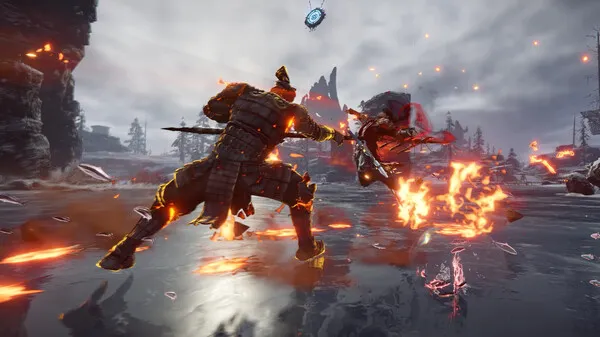
There is ongoing debate in the community about whether parrying is too strong, especially in competitive modes.
Some argue that successful parries are too punishing, especially with the disarm mechanic and the free damage follow-up. Others believe that parries are high-risk/high-reward and punish careless focus spamming. The skill gap between players who parry consistently and those who don’t is vast—leading to lopsided duels.
Potential balancing ideas include:
- Reducing the counter window after a parry
- Removing disarm unless specific conditions are met
- Shortening stun time after a successful parry
As the meta evolves, the devs may choose to rebalance the system, but for now, mastering parry remains one of the most skill-intensive and rewarding elements of NARAKA: BLADEPOINT.
Conclusion
The parry and counter system in NARAKA: BLADEPOINT is more than just a flashy mechanic—it’s the beating heart of its martial arts combat. Mastering this system requires deep understanding, precise timing, and a strong grasp of psychology. Whether you’re dominating 1v1 duels, baiting opponents in late-game fights, or clutching in team combat, parrying is the tool that turns the tide. As you improve your reads, learn weapon animations, and experiment with feints, you'll discover how central this system is to becoming a true champion on Morus Island.