

Few games have dominated global culture like Fortnite. From its battle royale takeover in 2017 to concerts by global superstars and collaborations with every franchise under the sun, Fortnite has become more than a game — it is a cultural platform. Yet beneath the flash of skins and live events lies a deeper struggle that defines its trajectory: Fortnite’s identity crisis.
Is Fortnite meant to be a casual, fun, unpredictable sandbox — or a finely tuned competitive esport? Epic Games has spent years shifting between these poles, often alienating one group of players while trying to satisfy another. The result is a fascinating but sometimes frustrating story of a game pulled between two worlds.
This article traces Fortnite’s identity crisis across its lifespan, analyzing how design choices, updates, and community reactions reveal a constant tension between casual play and competitive integrity.
1. Chapter One: The Casual Phenomenon
When Fortnite: Battle Royale launched in 2017, it was marketed not as a hardcore esports game but as a free, fun alternative to PUBG. Its colorful art style, goofy emotes, and building mechanics made it feel lighthearted in comparison to other shooters.
For many, Fortnite’s charm lay in its casual unpredictability. Players could experiment with building, use zany weapons like boogie bombs, and laugh at chaotic moments. The game’s early identity was firmly rooted in fun, not competition.
But popularity changes expectations. As millions joined, competitive-minded players began to demand ranked systems, esports tournaments, and balance changes. Fortnite’s casual playground was about to transform.
2. The Rise of Competitive Fortnite
By 2018, Fortnite had exploded into mainstream esports with the announcement of the Fortnite World Cup, boasting a $30 million prize pool. Suddenly, Fortnite wasn’t just a party game — it was a professional battlefield.
The competitive scene elevated building mechanics to an art form. Players like Bugha, Mongraal, and Benjyfishy showcased lightning-fast edits and builds that casual players couldn’t dream of matching. For esports fans, this was thrilling. For everyday players, it was alienating.
The split begins
Competitive Fortnite and casual Fortnite began to diverge. What felt balanced and fun for pros often felt oppressive for casuals. The very building system that made Fortnite unique became the source of its greatest divide.
3. The Weapon Vaulting Dilemma
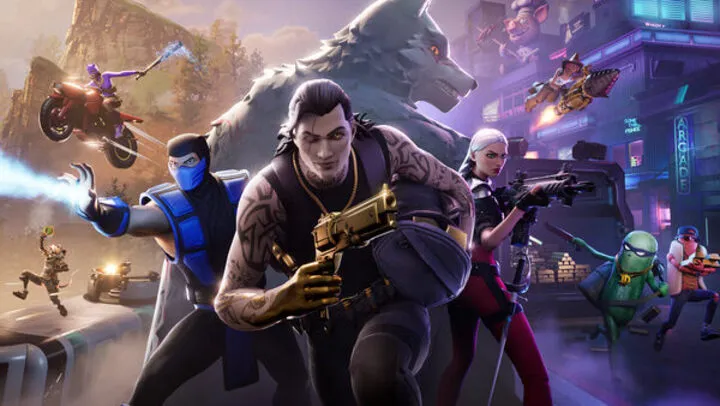
Epic’s approach to weapon balancing highlighted the growing tension. Unlike games with stable competitive metas, Fortnite constantly vaulted and unvaulted weapons.
- One season might feature quirky items like Infinity Blade or Mechs.
- Another season would strip the game down to more “serious” weapons like rifles and shotguns.
For casual players, this constant flux kept the game fresh and exciting. For competitive players, it was chaos. Practicing a weapon only for it to vanish weeks later made consistency impossible.
The balance paradox
Epic designed for fun, but competition thrives on stability. The vaulting system embodied Fortnite’s identity crisis.
4. Creative Mode: Expanding Casual Horizons
In 2018, Epic introduced Creative Mode, giving players the tools to build custom maps, mini-games, and experiences. This was Fortnite leaning fully into its casual identity — a sandbox for imagination.
For casual players, Creative Mode was liberating. For competitive players, it became a training ground. Box-fight maps, aim courses, and edit races became essential practice tools for pro play.
Two uses, one tool
Creative Mode revealed the duality of Fortnite. What was meant as a casual playground became a proving ground for esports training.
5. Chapter Two: The No-Build Revolution
In 2022, Epic introduced Zero Build, a mode without building. This was seismic. For years, Fortnite’s identity had been tied to building. Removing it was seen as sacrilege by some and salvation by others.
Casual players flocked to Zero Build, enjoying the simplicity of gunplay without sweaty build battles. Competitive players mostly stuck to traditional builds, seeing Zero Build as less skillful.
A split community
Zero Build highlighted how fractured Fortnite had become. The game now had two identities coexisting uneasily: the chaotic shooter for casuals, and the building-heavy esport for pros.
6. Live Events: Spectacle Over Competition
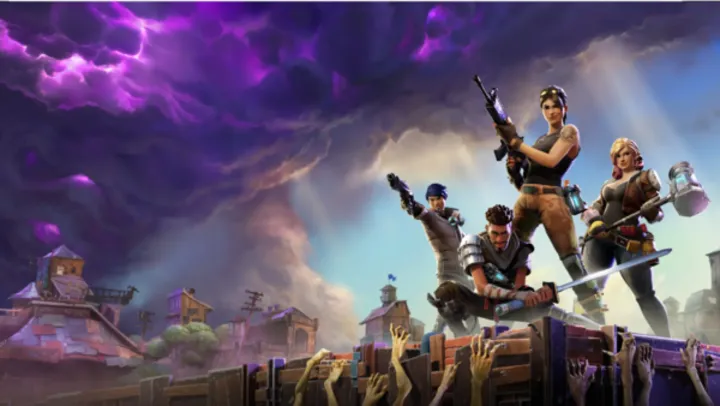
Another defining feature of Fortnite has been its live events — from the Marshmello concert to the Travis Scott performance, to reality-bending season finales.
These events cement Fortnite as a cultural platform, not just a game. They prioritize spectacle and inclusivity over competition. Millions log in just to watch, not to fight.
H3: The entertainment-first approach
For Epic, these events are proof that Fortnite is bigger than esports. But they also reinforce the divide, as competitive players often see resources poured into entertainment rather than balanced gameplay.
7. Esports Decline and Shifting Priorities
While Fortnite once had one of the most lucrative esports scenes, the shine has dimmed. Prize pools have shrunk, events are less frequent, and competitive Fortnite no longer commands the same spotlight.
Epic’s focus has shifted toward live service content — collaborations, skins, and casual modes. For competitive players, this feels like abandonment. For casuals, it’s business as usual.
H4: The fading dream of stability
Many pros lament that Fortnite never built the stable, league-style esports infrastructure of games like CS:GO or League of Legends.
8. Monetization and Identity
Fortnite’s monetization system — the item shop, battle passes, and endless collaborations — leans heavily into its casual identity. Buying a Spider-Man skin has nothing to do with esports.
For casual players, this is part of the fun. For competitive players, it’s a distraction, reinforcing that Epic prioritizes fashion shows and concerts over balanced tournaments.
The monetization vs competition clash
Esports audiences rarely care about cosmetics, but Fortnite’s economy depends on them. This clash deepens the identity crisis.
9. Community Divisions
The Fortnite community reflects the game’s split identity. On one side: casual players enjoying Zero Build, Creative Mode, and collaborations. On the other: competitive grinders demanding stable metas and bigger prize pools.
This division often plays out on social media, where pros complain about weapon balance while casuals celebrate goofy additions. Both groups love Fortnite, but they want fundamentally different things from it.
10. Reflection: The Hybrid Future
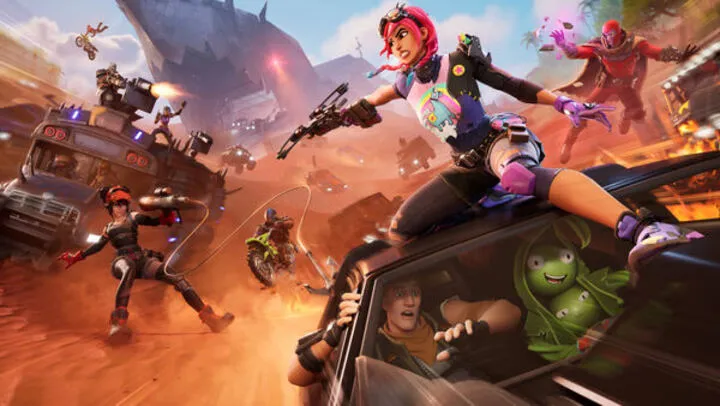
Today, Fortnite exists as both things at once: a cultural sandbox and a competitive esport. It may never fully resolve this tension, and perhaps it doesn’t need to.
The identity crisis is also a strength. Fortnite is the only game where you can watch a live Ariana Grande concert one day, then scrim against pro players in sweaty build fights the next. It is messy, contradictory, and uniquely Fortnite.
The challenge for Epic will always be balance — not between weapons, but between philosophies of play.
Conclusion
Fortnite’s journey is a story of dual identities. It began as a casual, goofy battle royale, then rose into the esports spotlight, then fractured into casual versus competitive camps. Epic has struggled to reconcile these directions, with updates often pleasing one group while alienating the other.
At its core, Fortnite’s identity crisis reflects its ambition. It doesn’t want to be just a shooter, or just an esport, or just a sandbox. It wants to be everything at once. Whether that ambition is sustainable remains to be seen — but it has made Fortnite one of the most fascinating games in history.