


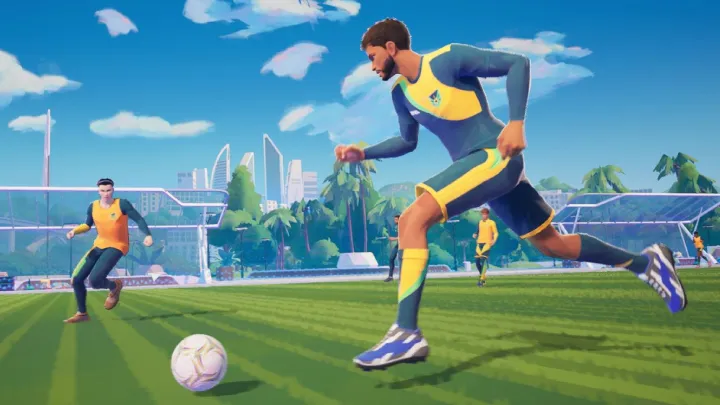
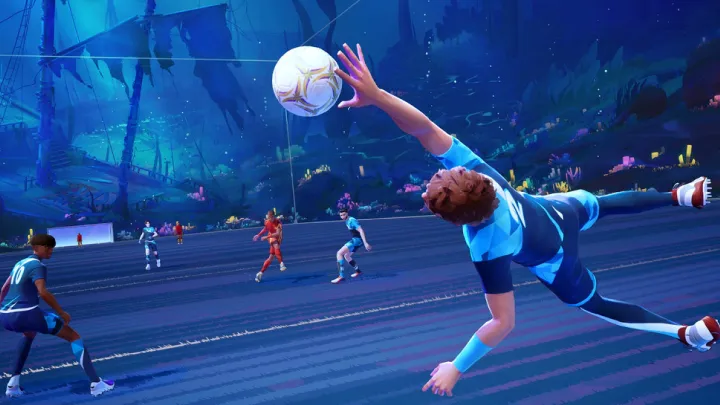
Rematch, the dynamic and fast-paced third-person football game, is an experience that is at its most rewarding when shared with friends. Developed by Sloclap, the studio behind the martial arts brawler Sifu, Rematch strips down the complexities of traditional football simulations and redefines the sport as a fluid, skill-based arena brawler. The game's design, which emphasizes player-by-player control, physics-driven ball movement, and non-stop action, makes it a perfect canvas for deep tactical collaboration. While playing with random teammates can be a chaotic and unpredictable affair, forming a pre-made squad with your friends elevates the game from a test of individual skill to a masterclass in coordinated teamwork. This guide provides a professional breakdown of the essential strategies, communication protocols, and tactical considerations required to dominate the pitch with your squad, turning raw individual talent into a cohesive, unstoppable force.
Understanding the Core Multiplayer Framework
The fundamental nature of Rematch is its online, team-based multiplayer structure. Unlike games that offer single-player campaigns or local co-op, Rematch is built from the ground up for online competition. It operates on a simple matchmaking system that pairs players into teams for a variety of modes, primarily 3v3, 4v4, and the standard competitive 5v5.
To play with friends, you must first create a party within the game's interface. Once a party is formed, the designated party leader can initiate matchmaking, and the entire group will be queued for a match together. It is crucial to note that at launch, the game does not support cross-platform play, so all players in your party must be on the same platform (e.g., all on Steam, all on PlayStation, or all on Xbox). This is a vital technical detail that must be confirmed before attempting to form a party.
The game's simplicity in connecting with friends is a design choice that places the focus squarely on gameplay. There are no dedicated private servers to rent or complex IP addresses to share. The entire process is handled seamlessly through the in-game social menu, allowing you and your friends to move from lobby to game with minimal friction. The real strategic depth begins once you've successfully entered a match together.
The Foundation of Team Communication
In a game as fast-paced as Rematch, where there are no fouls, offsides, or breaks in play, communication is the single most important factor for success. A team of skilled players who do not communicate will almost always lose to a team of average players who do.
Effective communication in Rematch can be categorized into two primary forms: tactical callouts and strategic planning. Tactical callouts are real-time, in-game commands. These are brief, actionable pieces of information that your teammates can use immediately. Examples include "I'm pushing up on the right," "I've got the ball," "Look for a pass," or "Need help on defense." Using an external voice chat application, like Discord, is highly recommended for this. The game's native voice chat can be useful, but an external service allows for greater clarity and customization.
Strategic planning, on the other hand, happens before and after matches. Before a match, you and your friends should discuss your game plan. What formation will you adopt? Who will be the primary playmaker? Who will focus on defense? After a match, you should conduct a post-game analysis. What worked well? Where did you make mistakes? Did a specific opponent pose a problem? This kind of reflection allows your team to evolve and improve over time, transforming a group of individuals into a well-oiled machine.
Mastering Team Roles and Positions
While Rematch does not have traditional, pre-defined positions like a striker or a defender, effective teamwork requires players to adopt fluid roles on the fly. The most successful teams have players who instinctively understand their role in a given moment, whether it's on offense or defense.
During an offensive possession, a key strategy is to establish a playmaker. This player is responsible for controlling the ball, assessing the field, and looking for passing lanes. Their role is to dictate the tempo and create scoring opportunities for their teammates. The other players on the team should then move into a support role, positioning themselves to receive a pass, create space by drawing defenders, or prepare for a rebound. In a 5v5 match, a common offensive strategy is to have one ball-carrier and four supporting players creating a wide formation.
During a defensive possession, the roles reverse. The player closest to the ball becomes the primary defender, tasked with harassing the opponent and attempting to steal possession. The other players must then fall back into a supporting role, covering the goal and blocking any potential shots. The game's unique mechanic of having the first player in the goal box automatically become the goalkeeper adds a crucial layer of strategy. A well-coordinated team will always have one player ready to drop back and defend the goal, ensuring there is a dedicated presence to make a save.
Coordinated Offensive and Defensive Strategies
Playing with friends allows for advanced strategies that are impossible to execute with random teammates.
On offense, one powerful strategy is the cross-field volley. This involves a player dribbling the ball on one side of the pitch while a teammate positions themselves on the opposite side. The ball-carrier then uses a powerful lob pass, or "lobed push ball," to send the ball across the field. The receiving teammate, if timed correctly, can volley the ball directly into the net, catching the opposing defense off guard. This requires precise timing and excellent communication, making it a powerful tool for a coordinated team.
Another effective offensive tactic is wall-passing. Since the arena is enclosed, you can bounce the ball off the walls to bypass defenders. A simple yet effective play is for the ball-carrier to pass the ball off the wall and have a teammate who is in front of them retrieve the rebound. This is a great way to create a quick one-two play and break through a tight defense.
On defense, a key strategy is the zonal press. Instead of everyone chasing the ball at once, your team should establish a zone defense, with each player responsible for a specific area of the field. When an opponent enters your zone, you apply pressure. If they escape your zone, a teammate in the next zone takes over. This system ensures that there is always pressure on the ball-carrier and that your defensive formation remains solid. The effectiveness of a zonal defense hinges entirely on communication, as players must constantly signal to each other when they are pressing and when they are falling back.
The Mental Game: Synergy and Adaptability
Beyond the technical skills and on-field tactics, playing with friends offers a massive advantage in the mental game. This is where your team’s synergy truly shines. The ability to trust your teammates is a critical element of success. When you send a risky pass, you must have faith that your friend will be in the right place to receive it. When you push forward on offense, you must trust that your defenders will hold their ground. This level of implicit trust comes only from playing together and understanding each other's playstyles.
Adaptability is another key component. In Rematch, no two matches are the same. Opponents will use different strategies, and your team must be able to adapt on the fly. Playing with friends allows you to quickly change your formation or your strategy in response to the opponent's actions. For example, if you notice the opposing team is weak on defense, you can collectively decide to adopt a more aggressive, all-out attack formation. If they are particularly good at long-range shots, you can decide to focus on a more defensive, high-pressure strategy. This quick, conversational adaptability is what separates good teams from great ones.
Troubleshooting Common Issues When Playing with Friends
Even with a well-coordinated team, you may encounter some technical issues. Understanding these common problems and their solutions can save you valuable game time and frustration.
The most common issue in Rematch is desynchronization, where the game state appears differently on two different players' screens. This can be caused by server lag or a poor internet connection. If you notice the ball teleporting or a tackle that should have connected failing, it is likely a desync issue. The best solution is to either try a different server or for all players to restart their game and their router. While the game's servers are generally stable, a poor local connection can still cause problems.
Another issue can be voice chat problems. If you are using an external application like Discord and you are experiencing issues with audio, ensure that everyone's microphones and headsets are working correctly. Also, make sure that no in-game sounds are overpowering the voice chat. You can adjust the audio mix in the game's settings to prioritize voice communication.
Finally, while the game’s matchmaking is designed to be fair, you and your friends may occasionally be matched against a much higher-ranked team. This is a common occurrence in any competitive game. The key is not to get discouraged. Use these matches as learning opportunities. Observe how the more skilled players position themselves, what strategies they use, and how they communicate. Losing can be a valuable lesson, and with friends, it is easier to bounce back and learn from your mistakes.
The Ultimate Team Experience
Playing Rematch with friends transforms the game from a chaotic solo endeavor into a deeply satisfying team sport. The game's emphasis on individual skill is balanced by the necessity of a cohesive team strategy. By mastering communication, understanding fluid team roles, and adapting to the fast-paced nature of the game, you and your friends can achieve a level of synergy that is impossible to replicate with random teammates.
The real joy of Rematch lies not just in scoring a spectacular goal, but in the collaborative effort that led to it. The perfectly timed pass, the crucial defensive block, and the collective celebration after a hard-fought victory—these moments are what make the game truly special. It is a testament to the game's design that it fosters a cooperative spirit that transcends the virtual pitch. The journey to becoming a dominant team is a long one, but with your friends by your side, it is an incredibly rewarding one.