





The abandoned zoo of Zoonomaly is a grotesque menagerie of shattered puzzles and lurking terrors. For the unprepared, its desolate exhibits and the unnatural creatures that roam its grounds will feel like an impossible descent into madness. Yet, for the seasoned survivor, this is not a game of chance, but a masterful exercise in tactical planning and intellectual discipline. A true expert understands that success in this grand ordeal is not about brute force or luck, but about adopting a strategic mindset and approaching each new exhibit as a critical piece of a larger, evolving operation. This comprehensive guide, authored from the perspective of a veteran who has navigated its ever-changing halls, will provide you with the tactical framework and operational discipline needed to unravel its secrets and emerge into the light. We will transform your initial confusion into a well-organized, mission-critical approach to the game.
The Core Philosophy: The Investigator's Mindset
A master player of Zoonomaly operates with a distinct mental discipline. They do not merely "survive" the game; they analyze and deconstruct it. Every action is purposeful, and every piece of information is a vital clue.
The first principle is to embrace the psychological warfare. The zoo is a hostile environment designed to break your will. The unsettling visuals, the disturbing sound design, and the unpredictable nature of the creatures are all elements of a greater psychological game. An amateur sees these as sources of fear; an expert sees them as a tactical disadvantage to be overcome. The key is to maintain emotional distance, to treat the terror not as a personal threat, but as an environmental obstacle to be navigated. Your most valuable resource is not your health, but your composure.
Secondly, you must treat the environment as a living entity. The zoo is not just a setting; it is an entity with a personality, a history, and its own rules. Every detail, from the placement of a discarded toy to the cryptic symbols scrawled on a wall, is a form of communication from the zoo itself. The expert player engages in a constant dialogue with the environment, asking questions and meticulously noting the answers. Why is this door locked with a strange symbol? Why does this particular animal exhibit feel out of place? Every architectural element, every piece of scattered debris, is a word in the zoo's cryptic language. Your primary weapon is not a firearm, but your intellect.
Thirdly, you must prioritize information over confrontation. In the early stages, the temptation is to rush forward and try to solve every puzzle or encounter every creature. The expert knows this is a fatal error. True progress in Zoonomaly is measured not in how many puzzles you've solved, but in how much you've learned. The most valuable resources are not items, but knowledge—the pattern of a recurring symbol, the function of a strange mechanism, the significance of a discarded diary entry. A master never leaves a room without first extracting every possible piece of information, as a clue found in one exhibit might be the key to a locked cage across the park.
Part 1: The Foundational Walkthrough - The First Entry
Your first few hours in Zoonomaly are a rite of passage. This is where you develop the foundational skills that will serve you throughout your journey.
Step 1: The Initial Survey. Upon entering a new area, take a moment to pause. Do not rush to the first interactive object. Instead, conduct a full 360-degree survey. Notice the lighting, the color palette, the state of the cages, and any visual anomalies. Is the exhibit pristine or derelict? Are there symbols on the floor or the ceiling? An expert player trains their eye to quickly identify anything that feels out of place or significant. This initial survey is your tactical reconnaissance.
Step 2: Methodical Interaction. Once you have surveyed the area, approach interactive elements with a systematic method. Do not simply click on everything. Instead, engage with objects in a logical order, perhaps clockwise from the entrance. When you find a note, read it carefully and take a mental note of its content. When you interact with a puzzle, observe its mechanics and the clues in its immediate vicinity before attempting a solution. Rushing into a puzzle without understanding its parameters will only lead to a dead end and wasted time.
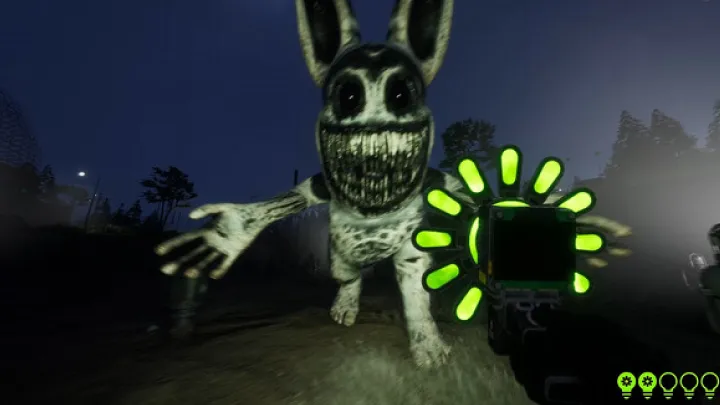
Step 3: Managing the Beasts. The most immediate and terrifying threat in the zoo is the creatures. However, the expert player understands that these are not just monsters; they are puzzles in motion. Each creature has a unique pattern of movement and behavior. Some may be alerted by sound, while others are triggered by light. Your primary objective when dealing with a creature is not to defeat it, but to understand it. Once you understand its behavioral patterns, you can exploit them to your advantage. You can use noise to lure it away from your path, or use shadows to hide from its sight.
Part 2: The Puzzle System - A Tactical Breakdown
As you progress, the puzzles become more intricate and the clues become more abstract. This is where the true strategic genius of a master is revealed.
A. Pattern Recognition: The Language of the Zoo. The zoo's procedural nature is not completely random; it operates on a set of underlying rules and patterns. The expert player trains themselves to recognize these patterns. For instance, a series of seemingly random numbers might correspond to the number of bones in a nearby exhibit. A sequence of symbols on a wall might correlate to the order in which you must interact with statues in a fountain. This level of pattern recognition is what separates a novice from a master.
B. Information Synthesis: Weaving the Narrative Web. The most complex puzzles in Zoonomaly are not contained within a single room. They require you to synthesize information from multiple locations, sometimes even from different exhibits or previous runs. The expert player maintains an internal log of all significant clues they've encountered—a specific date from a plaque, a strange phrase from a diary, the order of colors in a stained-glass window. When they encounter a puzzle, they don't just look for local clues; they mentally cross-reference with their entire database of knowledge. This process of information synthesis is the key to solving the game's grand, overarching mysteries.
C. The Use of Exclusionary Logic. When faced with a puzzle that has multiple potential solutions, the expert player employs exclusionary logic. Instead of trying every possible answer, they use their clues to systematically eliminate the incorrect ones. If a clue points to the color "blue," they immediately eliminate all solutions involving other colors. This methodical process reduces the number of variables and allows them to arrive at the correct solution with greater speed and efficiency. It is the core of any professional's problem-solving toolkit.
D. The Narrative as a Clue. Zoonomaly is not just a puzzle game; it is a narrative experience. The expert player understands that the lore and story are not just flavor text; they are a vital source of clues. A story about a past zookeeper's obsession with a specific constellation might be the key to a star-based puzzle. A mention of a family member's favorite animal might be the hint to a coded combination. The expert player pays as much attention to the subtle whispers of the narrative as they do to the overt visual clues.
Part 3: Resource Management - The Survivalist's Strategy
While the creative aspects of Zoonomaly are the main attraction, the expert creator understands the importance of the game's grind. The puzzles and creature encounters are your source of new items and currency.
A. The Gacha Strategy: The Gacha system allows you to spend gems to acquire new characters, pets, and studio backgrounds. The expert player knows to save their gems for specific Gacha banners that feature items they need for their creative projects. A true master also understands the importance of the Gacha's "pity" system, which guarantees a rare item after a certain number of pulls.
B. Mini-Games: The mini-games are an efficient way to earn gems and other currency. The expert player knows which mini-games are the most profitable and practices them to get high scores. This is a crucial part of the grind, as it provides you with the resources you need to expand your creative options.
Part 4: The Expert's Edge - Advanced Tactics and Mindset
Beyond all the technical aspects, a true master has a disciplined and patient mindset. They do not get frustrated by failure; they learn from it.
A. Patience and Persistence. The journey through the zoo will be filled with moments of confusion and frustration. The expert player embraces these moments. They understand that a "failed" attempt is simply a data-gathering exercise. If a puzzle stumps you, do not give up. Take a break. Go back to an exhibit you've already cleared and look for new clues. Sometimes, the solution to a puzzle is not in the room itself, but in a small detail you overlooked a hundred feet away.
B. The Power of Observation. This cannot be overstated. The expert player's greatest asset is their ability to see what others miss. They notice the slight shift in color in a tapestry, the barely-perceptible crack in a floorboard, the single book that is out of place on a shelf. They are not just looking; they are actively observing. They are not just listening; they are actively hearing. This heightened state of awareness is what allows them to solve puzzles that seem impossible to others.
C. The Mental Map of Success. The expert player approaches Zoonomaly with a mind-map, not a checklist. They are not just checking off exhibits and puzzles; they are building a complex web of interconnected ideas and clues. They are constantly looking for connections, for patterns, and for the underlying logic that ties everything together. The victory is not just in surviving the final encounter, but in the profound satisfaction of having mentally constructed the entire zoo's intricate and haunting logic.
In conclusion, the journey to becoming a Zoonomaly legend is a philosophical one. It is a moment for strategic preparation, meticulous observation, and a commitment to excellence. By following a professional approach, you can ensure that your path through the zoo is a journey of triumph, not frustration. A clean, smooth mind is the foundation upon which all future legends are built.