

World of Warships is a naval combat game praised for its tactical depth, historical authenticity, and ship variety. Yet one of its most impactful systems is also one of the most opaque: matchmaking. The matchmaker determines which players face each other, at what tiers, and in what combinations of ship classes. When matchmaking becomes unbalanced, it introduces significant distortions in gameplay quality, competitiveness, and long-term enjoyment.
This article focuses specifically on the issue of matchmaking imbalance—its origins, how it functions today, and the consequences it creates across gameplay, player experience, and game design. We'll walk through the issue chronologically and thematically, with a final section proposing realistic solutions.
1. Origins of Matchmaking in World of Warships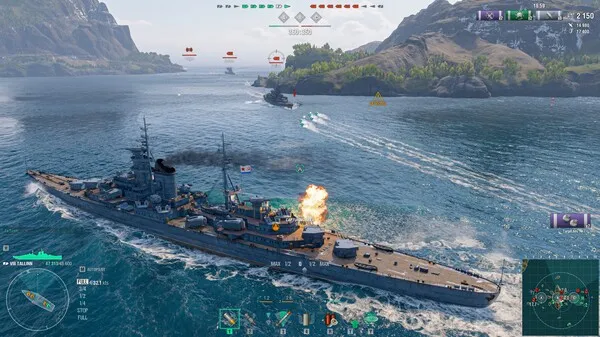
When World of Warships launched in 2015, the game had a small roster of ships and a limited set of naval nations. Matchmaking was designed to be simple: match ships of similar tiers and balance ship classes like destroyers, cruisers, and battleships across both teams. The standard tier spread was ±1 (e.g., Tier 6 could see Tier 5 or 7).
At the time, this model worked reasonably well due to the game’s small ecosystem. But as more ships, nations, and unique mechanics were introduced, the limitations of this basic matchmaking system began to show. It struggled to accommodate diverse playstyles, ship roles, and emerging metas, especially when more premium and event ships entered the game.
2. The Current State of Matchmaking
Today, matchmaking still operates on the ±1 tier system, but it does so with "soft" rules. These are guidelines rather than hard constraints. For example, it aims for class balance (e.g., two destroyers per team), but won't wait long in the queue to enforce it. Instead, it prioritizes quick match creation.
In practice, this means you can frequently get games where one team has three destroyers and the other has one. Or, more commonly, Tier 8 players find themselves constantly matched with Tier 9s, putting them at a noticeable disadvantage.
Key Limitations:
- Class imbalance is tolerated to reduce queue times.
- Divisions can stack coordination advantage on one team.
- The system rarely considers player skill or performance history.
3. Immediate Gameplay Consequences
When matchmaking is unbalanced, the effects are immediate and measurable in battle. Players on the bottom tier are forced to play more cautiously, avoid open water, and rely heavily on teammates. This limits aggressive tactics, especially for destroyers and cruisers.
Meanwhile, top-tier ships dominate by virtue of raw stats—more health, better concealment, stronger guns. This creates uncompetitive fights where lower-tier ships are quickly removed from the match, leading to steamroll victories and short matches.
Tactical Outcomes:
- Bottom-tier players adopt passive, survival-focused play.
- Top-tier ships push more aggressively with fewer risks.
- Teamplay breaks down as balance shifts heavily early in battle.
4. Matchmaking’s Impact on the Meta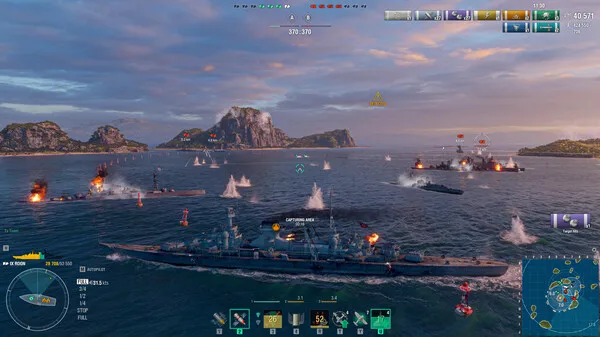
The imbalance has a direct effect on ship selection and the meta. Players gravitate toward ships that perform well even when bottom-tiered. These usually include:
- Battleships with strong armor and heal
- Destroyers with stealth torpedoes
- Cruisers with radar or smoke
Ships that struggle in up-tiered games—like lightly armored cruisers or slow battleships—are picked less often, regardless of how fun or thematic they may be.
Shifting Player Behavior:
- Preference for premium ships with enhanced stats
- Less diversity in ship types played
- Builds focus on survivability over specialization
5. Psychological Effects on Players
Consistently being on the weaker end of matchmaking takes a toll. Players begin to feel helpless or unfairly punished by the system. This is especially true for casual or newer players, who don’t have the game knowledge or ship lineup to adapt.
This results in:
- Tilted players who blame the game for losses
- Increased toxicity in chat and forums
- Lower retention, particularly among new users
Veteran players are also affected. They may feel burned out from constantly needing to "carry" weaker teams or get bored of steamrolling unbalanced games.
6. The Premium Ship Effect
Premium ships play a complicated role in matchmaking. Many are well-balanced, but others—especially rare or discontinued ones—offer significant advantages. Some premium ships have better economies, unique consumables, or more favorable matchmaking profiles.
When players with powerful premiums are matched against standard tech tree ships, balance can tip drastically. This has created a perception among some players that spending money gives a competitive advantage.
Issues With Premium Dominance:
- Premium ships are often overrepresented in high-tier games
- Some offer mechanics unavailable to tech-tree ships
- Players feel pressured to purchase in order to compete
7. Division Imbalance and Matchmaker Exploits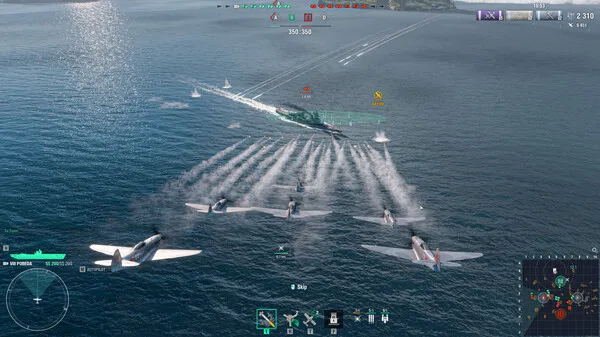
Players using divisions—small groups of up to three queuing together—can unintentionally exploit matchmaking. Skilled divisions using synergistic ship combinations (e.g., radar cruiser + smoke destroyer + tanky battleship) gain a major advantage over solo opponents.
Matchmaker does not always balance divisions with equivalent ones on the opposing team, which can lead to one-sided games where the division dictates the outcome from the first few minutes.
Consequences:
- Disincentivizes solo queuing
- Encourages competitive players to stack divisions
- Skews results in random and ranked battles alike
8. Competitive and Ranked Battle Distortions
Even in competitive modes like Ranked or Clan Battles, matchmaking struggles. Ranked battles frequently mix players with very different skill levels, and often allow significant tier power discrepancies.
High-performing players climb quickly, but others remain stuck in volatile matchmaking. This can turn Ranked into a frustrating grind rather than a skill-based progression system.
Competitive Challenges:
- Uneven skill distribution across teams
- No control over class composition in solo queues
- Poor matchmaking undermines the competitive integrity of Ranked mode
9. Community Frustration and Feedback
The community has voiced strong concerns about matchmaking for years. Common complaints include:
- Always being bottom tier
- Lopsided class distribution (e.g., 3 DDs vs 1)
- Frequent matches with no carriers one game, and two the next
In response, developers have made some adjustments, like limiting tier spreads during certain events or temporarily testing skill-based matchmaking in small formats. However, the perception remains that not enough is being done to address the issue long-term.
What Players Want:
- Option for stricter matchmaking even if it takes longer
- More transparency about matchmaking mechanics
- Better balancing of divisions and premiums
10. Solutions for Improving Matchmaking
Fixing matchmaking isn’t easy, but there are several promising solutions that could reduce imbalance while maintaining queue health.
1. Strict Mode Opt-In:
Allow players to choose a queue with strict tier and class balance. Wait times may be longer, but match quality improves.
2. Soft Skill-Based Matchmaking:
Match players based on performance metrics (like average damage or win rate), especially in Ranked or events.
3. Tier Compensation:
Offer subtle bonuses to bottom-tier ships in up-tier matches. This could include slightly faster reload times or increased concealment.
4. Transparency Tools:
Show players what the matchmaking criteria are and why a given match was formed. More information leads to more trust.
These changes would go a long way toward making players feel heard, respected, and excited to queue up.
Conclusion
Matchmaking imbalance in World of Warships is a systemic issue that affects every aspect of the game—from moment-to-moment tactics to long-term player engagement. While the game offers deep strategic play and complex ship interactions, none of it matters when the battlefield is uneven before the first salvo is fired.
If Wargaming wants to keep both new and veteran players invested, addressing matchmaking should be a top priority. Whether through stricter queues, smarter algorithms, or greater transparency, fair matchmaking is key to keeping the game fun, competitive, and healthy.