






The Evolution of Open-World Exploration in The Legend of Zelda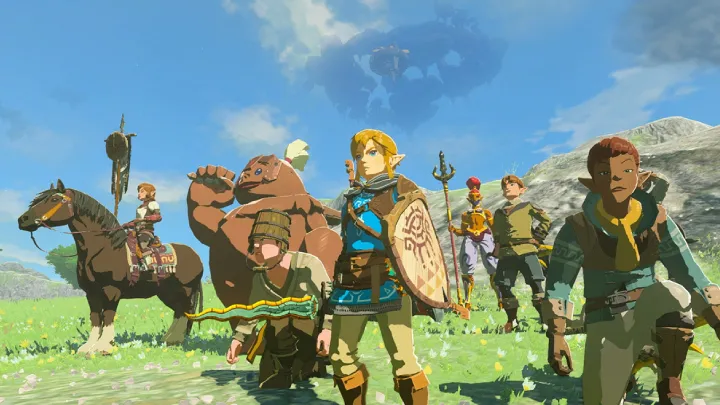
Since its debut in 1986, The Legend of Zelda has been more than just a beloved adventure series. At its heart lies a constant question: how should players explore a vast and mysterious world? From the original NES classic to Tears of the Kingdom, Zelda has continuously redefined the meaning of open-world exploration. This article traces that evolution, examining how Nintendo’s design philosophy shifted across decades, shaping not only Zelda but the gaming industry as a whole.
The 8-Bit Beginning: The Legend of Zelda (1986)
The first Legend of Zelda was revolutionary for its time. Unlike linear arcade titles, it gave players a sprawling overworld with no clear instructions. Exploration was non-linear: players could walk in any direction, discover hidden caves, and stumble upon dungeons in unpredictable order.
Key to this sense of freedom was the absence of explicit guidance. With nothing more than a sword handed to Link and the cryptic message, “It’s dangerous to go alone! Take this,” players were thrown into Hyrule to carve their own path. This design rewarded curiosity and experimentation, setting a foundation for all future Zelda games.
Features of Exploration in 1986
- Non-linear map layout with hidden secrets
- Use of items (bombs, candles) to unlock hidden paths
- Battery save system enabling long-term exploration
The Adventure of Link (1987): A Shift in Perspective
Nintendo experimented dramatically in the sequel. The Adventure of Link introduced side-scrolling mechanics and an RPG-like overworld map. While the game remained focused on exploration, it shifted emphasis from discovery to combat and leveling systems.
This change divided fans. On one hand, the map still encouraged wandering and discovery. On the other, the restrictive side-scrolling dungeons and experience grind made exploration feel less organic compared to the first game. It was an early sign that Nintendo was willing to test boundaries, even if it meant polarizing the fanbase.
A Link to the Past (1991): The Dual-World Revolution
With the SNES came A Link to the Past, often hailed as one of the greatest games of all time. Exploration took on new complexity through the introduction of the Light World and Dark World. Players had to navigate not just one overworld, but two mirrored versions, each affecting the other.
This duality gave exploration a puzzle-like quality. Secrets in the Light World influenced access in the Dark World and vice versa. It was a bold expansion of the original open-world design, showing that exploration could be both spatial and logical, demanding cleverness as well as persistence.
Exploration Innovations in ALttP
- Two interconnected overworlds
- Non-linear dungeon order with progressive item unlocking
- Environmental storytelling through geography
Ocarina of Time (1998): The Leap into 3D
Perhaps the most influential entry, Ocarina of Time transformed Zelda’s exploration into a fully realized 3D world. Hyrule Field served as a central hub, connecting diverse regions like Death Mountain, Lake Hylia, and Gerudo Valley. For the first time, players could feel the scale of Hyrule as a living, breathing world.
Exploration was enhanced by mechanics like Epona, the horse that allowed faster travel, and the Ocarina itself, which granted time travel and teleportation. The move to 3D not only changed the way players navigated but also reshaped how designers constructed spaces. Verticality, camera control, and environmental immersion became essential parts of exploration.
Majora’s Mask (2000): Exploration Within Time Limits
Where Ocarina emphasized scale, Majora’s Mask emphasized depth. Exploration here was not about how far you could go, but how much you could uncover within a repeating three-day cycle. Clock Town and Termina became dense hubs of interaction, with NPC schedules that encouraged observation and experimentation.
This shift made exploration more psychological and social. Instead of vast open spaces, the richness came from tracking characters, learning their routines, and solving puzzles within time constraints. It proved that exploration could be meaningful even in a compact, time-bound world.
The Wind Waker (2002): Exploration Across the Seas
The Wind Waker reimagined exploration on the open sea. Players traversed a vast ocean dotted with islands, sailing across wind-swept waters. At first controversial for its cel-shaded art style, the game ultimately earned praise for its sense of boundless adventure.
The sea, however, was both liberating and divisive. While some found sailing meditative and expansive, others criticized the pacing. Still, the game expanded Zelda’s definition of open-world exploration, showing it could encompass not just land, but sea, and embrace an atmosphere of wonder and serenity.
Exploration Features
- Seamless sailing mechanics
- Island-hopping discovery
- Dynamic weather and ocean systems
Twilight Princess (2006): A Darker World to Explore
In contrast, Twilight Princess embraced a darker, more realistic art style and a denser overworld. Exploration leaned into atmospheric tension, blending classic Zelda puzzles with immersive environments. Transformations into Wolf Link added new mechanics, allowing exploration through heightened senses and unique traversal abilities.
While criticized by some as overly linear compared to earlier entries, the game’s detailed regions and narrative-driven design showed Nintendo’s attempt to balance player freedom with cinematic storytelling.
Skyward Sword (2011): Exploration in the Skies
Skyward Sword attempted to innovate exploration through sky islands and motion-control mechanics. The Loftwing, Link’s bird companion, became central to traversal between floating islands and surface worlds. However, its segmented overworld structure limited the sense of seamless exploration fans had come to expect.
Despite its restrictions, the game introduced verticality as a new dimension for exploration. The idea of layered worlds—sky above, surface below—laid the conceptual groundwork for what Nintendo would later perfect in Tears of the Kingdom.
Breath of the Wild (2017): Redefining Open-World Freedom
Breath of the Wild shattered conventions by offering complete freedom from the start. After leaving the Great Plateau, players could climb mountains, glide across valleys, cook meals, and approach objectives in any order. Exploration was no longer gated by items; instead, the physics-based world itself became the puzzle.
This design philosophy emphasized emergent gameplay. Whether shield-surfing down snowy peaks or creatively using bombs for traversal, players were empowered to create their own solutions. Zelda was no longer about what path you should take, but what path you wanted to take.
Tears of the Kingdom (2023): Expanding the Vertical Frontier
Tears of the Kingdom expanded on Breath of the Wild by adding new layers of exploration: the skies above and the Depths below. Ultrahand and Fuse introduced creative construction, allowing players to build vehicles, bridges, and machines to traverse the world.
This expansion made exploration not only freer but more personal. Every puzzle became a sandbox, every obstacle an opportunity for invention. With three interconnected layers of Hyrule, Tears of the Kingdom may represent the pinnacle of Zelda’s exploration design to date.
Conclusion: The Timeless Spirit of Exploration
Across nearly four decades, The Legend of Zelda has continually redefined what it means to explore a world. From the silent forests of 1986 to the skies of Tears of the Kingdom, the franchise reflects a philosophy of curiosity, freedom, and discovery. Each entry pushed boundaries, experimenting with scale, mechanics, and player agency.
Exploration in Zelda is not just about traversing a map—it’s about engaging with a philosophy of play that values creativity, courage, and imagination. As gaming continues to evolve, Zelda’s spirit of exploration will remain a guiding light for both players and designers.