


Introduction
Since its debut as a remake, The Last of Us™ Part I has remained under the spotlight—not just for its emotional narrative but also for how its technical evolution continues to shape its relevance into 2025. This feature unpacks the latest and most consequential updates as of mid‑2025, examining how Naughty Dog and Iron Galaxy tackled performance, stability, rendering enhancements, accessibility, and cross‑platform polish. We’ll explore how each patch contributes to the longevity of this title and why it remains a standout among remakes.
1. The Evolution of Rendering Excellence with PlayStation 5 Pro (Patch 2.000.000)
Late 2024 introduced a watershed moment for the PlayStation 5 version with Update 2.000.000. This patch unlocked a true visual leap forward by adding “Pro” mode—a new rendering option leveraging PlayStation Spectral Super Resolution (PSSR). Users on PS5 Pro now enjoy native 1440p rendering upscaled to 4K, maintaining a smooth 60 frames per second. Traditional Performance and Fidelity modes remain available, but this upgrade notably bridges the gap between graphical fidelity and performance fluidity.
This was groundbreaking—not merely a patch, but a statement that the developers intended to push technical boundaries while preserving gameplay smoothness. For aficionados of realism and cinematic immersion, this move underlines how hardware-specific enhancements can breathe new life into a decade’s old narrative.
2. Fixing Core Crashes and Cutscene Reliability (Patch 2.001.000)
A month later, Update 2.001.000 focused attention on fragile areas of the game experience. It resolved crashes in critical final cutscenes, notably those in “Jackson” (Chapter 12 of the main story) and the concluding moments of “Left Behind.” Melee combat volatility was also addressed, along with motion blur inconsistencies, ensuring visual coherence and story continuity.Naughty Dog
By stabilizing dramatic moments, the developers reaffirmed their commitment to maintaining the integrity of emotional storytelling—especially at climactic junctures where a disruption could shatter immersion or frustrate completion.
3. Performance Refinement on PC: Update 1.1.0
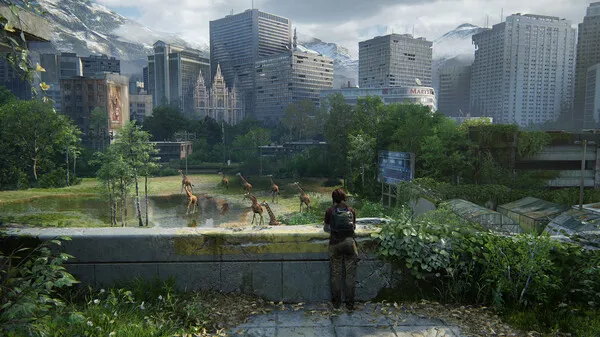
On the PC side, early 2025 patch 1.1.0 tackled foundational performance improvements. It streamlined shader compilations, optimized CPU and GPU performance, and addressed various crashes—from controller configuration to Photo Mode in 4K. The patch also enhanced shader reliability on Intel GPUs and improved memory stability on Steam Deck platforms.
This update formed the backbone of technical resilience across varied hardware configurations. By removing crashes and improving load speeds, such refinements allowed a wide swath of PC players to experience the game unimpeded—even those with mid-range systems.
4. Enhanced Visual Upscaling with FSR 3.1 (Patch 1.1.4)
In January 2025, Update 1.1.4 introduced AMD FSR 3.1 Super Resolution and Frame Generation on PC—a response to growing demand for high-quality performance boosts. It also resolved visual glitches in specific areas (The University generator, Bus Depot flashlight bug) and fixed text-to-speech accessibility issues.
Players welcomed this—especially those using upscaling technologies to extend hardware lifespan—though conversations on Reddit noted the absence of Nvidia DLSS 4 support was still a sore point.
5. Stability Sprint: The Deliveries of Patch 1.1.5
Mid‑2025’s patch 1.1.5 carried forward improvements but with sharper focus. It integrated FSR 4.0 for enabling through in‑game settings, improved stability with crash fixes and smoother frame pacing, and addressed audio issues on the Steam Deck. The update also transferred optimizations from The Last of Us Part II Remastered, elevating consistency across the franchise.
This patch marked the culmination of iterative improvements, creating a dependable technical foundation for the PC version—crucial for a game with a rocky launch performance.
6. Community Response and Beta of Technical Excellence
Across online forums and Reddit, players documented the transformative impact of these updates. The FSR 3.1 patch, in particular, sparked enthusiastic discussion, with many praising its future-forward compatibility and hopes for DLSS 4. Enthusiasts appreciated the performance and visual gains, although many remained cautious due to past technical quirks.
Such feedback loops underscore the importance of ongoing support and communication—the community shapes patches, while updates demystify past frustrations.
7. Accessibility Gains Beyond Performance
Numerous fixes centered on accessibility: text-to-speech responsiveness, prompt accuracy, menu navigation, assist features. These may not headline patch notes, but they matter to players with sensory or motor challenges—expanding the emotional reach of the story.
With representation trending in game design, these enhancements build goodwill, enabling more players to experience this resonant narrative without barriers.
8. Consolidation: The Last of Us Complete Bundle
April 2025 marked the release of The Last of Us Complete, bundling Part I and Part II Remastered digitally, with a collector’s physical edition following in July—complete with SteelBook, art prints, and American Dreams comic insert.
This release isn’t just marketing. It leveraged renewed attention from the TV adaptation and solidified the franchise’s enduring narrative through coherent packaging—ensuring new and returning players have access to polished, canonically consistent editions.
9. Recognition and Awards: Visual Fidelity Rewarded
Despite being a remake, The Last of Us Part I captured industry acclaim, winning Outstanding Visual Effects in a Real-Time Project and earning nominations for Technical Achievement, Accessibility, Story, and Soundtrack. It remains a reference point for both narrative and technical excellence.
This recognition is a testament to how a thoughtful remake can transcend nostalgia—becoming an exemplar in both form and function.
10. The Broader Picture: Legacy, Support, and Future Prospects
Taken together, these updates reflect not just technical cohesion but strategic stewardship. The technical enhancements, accessibility improvements, and recognized achievements illustrate how The Last of Us Part I continues to earn its place in player hearts—even years after launch.
The release of The Last of Us Complete aligns with the television series’ second season in 2025 and planned third season, creating a feedback loop between media that boosts interest in the game.

Conclusion
In 2025, The Last of Us™ Part I didn’t just rest on the laurels of its narrative or initial technical leaps—it continually evolved. Through layering support across platforms, fine-tuning rendering on PS5 Pro, introducing hardware-level upscaling, and unlocking more stable, accessible experiences, the game stands as a model for how remakes can sustain relevance.
Technical polish, pain‑point fixes, and thoughtful updates ensure the emotional story of Joel and Ellie remains accessible, poignant, and visually stunning—even as hardware and responsiveness advance. For players and developers alike, this year has shown that honoring a legacy means tending to every detail—no matter how small.