


The Legend of Zelda: Breath of the Wild – The Controversial Legacy of Weapon Durability

When The Legend of Zelda: Breath of the Wild launched in 2017, it was praised as one of the greatest video games ever created. Its open-world design, freedom of exploration, and immersive physics-based systems set a new benchmark in gaming. Yet, amidst the universal acclaim, one mechanic sparked heated debates that persist to this day: weapon durability. This system, where weapons degrade and eventually shatter after repeated use, redefined how players approached combat and strategy. Some hailed it as brilliant design, while others condemned it as frustrating. This article will dive deeply into the timeline, design philosophy, impact, and ongoing discussion surrounding weapon durability in Breath of the Wild.
Early Introductions: Why Nintendo Added Weapon Durability
The idea of weapon durability was not random—it was carefully integrated into Breath of the Wild’s survival-focused design. Nintendo wanted players to feel vulnerable in a vast, dangerous world. By ensuring weapons were temporary rather than permanent, the developers encouraged experimentation and resource management. Instead of clinging to one powerful sword, players were forced to constantly adapt.
This design choice aligned with the overall theme of impermanence in the game. Nature, weather, and enemies were unpredictable. Just as a thunderstorm could strike or stamina could drain mid-climb, a weapon could shatter mid-battle. Nintendo’s goal was to create tension and force creative problem-solving, preventing players from relying solely on brute strength.
First Encounters: How New Players Reacted
For most players, the first time a weapon broke was a shock. After defeating a small group of Bokoblins with a newly looted club, seeing it suddenly shatter in Link’s hands felt jarring. Many players initially assumed it was a punishment rather than a feature. Social media quickly filled with complaints and memes about constantly running out of weapons.
Yet, some embraced it. For these players, early-game scarcity created a survivalist thrill. Every rusty sword or tree branch mattered, and improvisation became part of the fun. This polarization of opinion highlighted how radical the system was compared to traditional Zelda mechanics, where iconic weapons like the Master Sword never left your inventory.
Adapting to Scarcity: The Mid-Game Experience
As players progressed, weapon durability began to shape combat strategy. By mid-game, Link’s arsenal was a revolving door of spears, swords, and elemental weapons. The mechanic forced players to consider which battles were worth fighting. Was it wise to waste a powerful flameblade on a group of weak enemies? Or should it be saved for a Lynel encounter?
This scarcity encouraged exploration. Shrines, enemy camps, and hidden chests became valuable not just for rupees or armor, but for replenishing weapons. Some players developed habits of hoarding rare gear, using only disposable weapons for minor fights. Ironically, the mechanic that was supposed to encourage experimentation sometimes led to over-conservation.
The Master Sword: A Partial Solution
Halfway through the adventure, players could obtain the legendary Master Sword. Traditionally unbreakable in past Zelda games, here it was redesigned to fit the durability system. The Master Sword never truly shattered but instead “powered down” after heavy use, requiring a cooldown before it could be wielded again.
This compromise symbolized Nintendo’s balancing act. They wanted to honor the legacy of the series while maintaining their survival mechanics. For some players, the Master Sword was a relief—a semi-permanent weapon in a sea of fragile tools. For others, even this felt like a betrayal of tradition, as the "sword that seals the darkness" was not truly eternal.
High-Level Combat: Lynels and Guardians
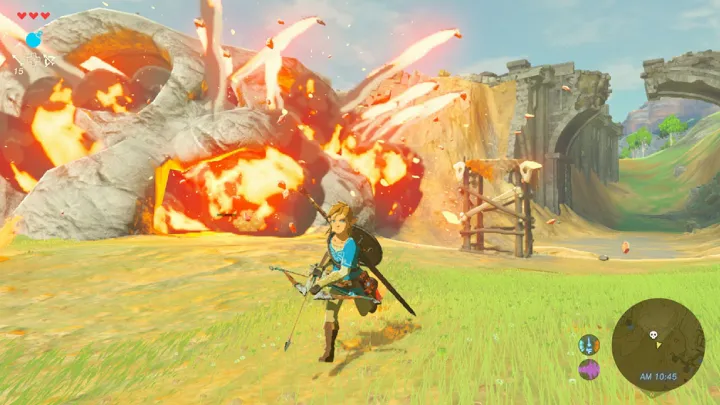
Late-game enemies like Lynels and Guardians pushed weapon durability to its limit. These battles were wars of attrition, where even the strongest blades could break before the fight ended. Many players described frustration after spending entire arsenals just to defeat a single enemy, only to feel like the reward wasn’t worth the investment.
However, this was intentional. Nintendo wanted these fights to feel monumental. By forcing players to burn through resources, each victory felt earned. It also ensured that powerful weapons never trivialized late-game challenges, maintaining tension all the way to the final battle with Calamity Ganon.
Community Backlash and Modifications
Weapon durability quickly became one of the most controversial aspects of Breath of the Wild. Reviewers praised the mechanic as a clever twist, but online communities were divided. Many fans argued it created artificial difficulty and interrupted the flow of combat. Others countered that it added depth and prevented stagnation.
On PC emulators, mods began appearing that removed durability altogether, giving players unbreakable weapons. These mods gained popularity, suggesting a significant portion of the fanbase preferred permanence. Yet, defenders of durability argued that removing it undermined the game’s design philosophy and turned combat into a repetitive grind.
Philosophy Behind the Design
To understand Nintendo’s decision, one must look at Breath of the Wild’s design philosophy. The game emphasized freedom, creativity, and resourcefulness. Weapon durability was not just about breaking—it was about pushing players to experiment. A player who might never try a boomerang, elemental rod, or Korok leaf was forced to discover their unique properties because their favorite sword would eventually break.
Encouraging Creativity
- Players learned to use bombs strategically to conserve weapons.
- Environmental tactics like rolling boulders or igniting grassfields became alternatives to brute force.
- Durability made combat more dynamic, less about raw power and more about clever problem-solving.
Tears of the Kingdom: Nintendo’s Response
When the sequel The Legend of Zelda: Tears of the Kingdom released, all eyes were on whether Nintendo would abandon weapon durability. Surprisingly, it remained—but evolved. In Tears of the Kingdom, the new Fuse mechanic allowed players to combine weapons with materials, extending their usefulness and adding creative customization.
This innovation softened the frustration. A weak sword could become powerful when fused with a monster part, and durability loss felt less punishing because new combinations were always possible. Nintendo effectively doubled down on the system, proving it was central to their vision of modern Zelda.
The Broader Legacy of Weapon Durability
Today, weapon durability in Breath of the Wild stands as one of the most talked-about mechanics in modern gaming. It inspired debates about player agency, survival mechanics, and the balance between challenge and frustration. Love it or hate it, durability shaped the identity of Breath of the Wild, distinguishing it from other open-world RPGs.
More importantly, it influenced game design beyond Zelda. Survival games, roguelikes, and even mainstream action titles began experimenting with temporary tools and breakable equipment. Nintendo’s bold choice sparked an industry-wide conversation about permanence in gameplay systems.
Conclusion: Fragility as a Design Statement
Weapon durability in The Legend of Zelda: Breath of the Wild was never meant to please everyone. Instead, it was a deliberate design statement: that fragility and impermanence could make a world feel more alive, more dangerous, and more rewarding. By embracing scarcity, players learned adaptability and creativity in ways that permanent weapons could never achieve. Whether frustrating or ingenious, durability has become an inseparable part of the game’s legacy, shaping not only Zelda but the future of open-world design.