




Remote work is no longer just a backup plan—it has become the foundation of how modern businesses operate. By 2025, artificial intelligence (AI) has taken on a transformative role in shaping how we collaborate, manage projects, and communicate across digital environments. What once required hours of manual effort can now be automated, predicted, or intelligently optimized by AI-driven apps.
In this article, we explore the Top 10 AI apps revolutionizing remote work in 2025, highlighting how they are helping teams overcome challenges, boost productivity, and redefine the future of professional collaboration.
1. Notion AI – Smarter Knowledge Management for Teams
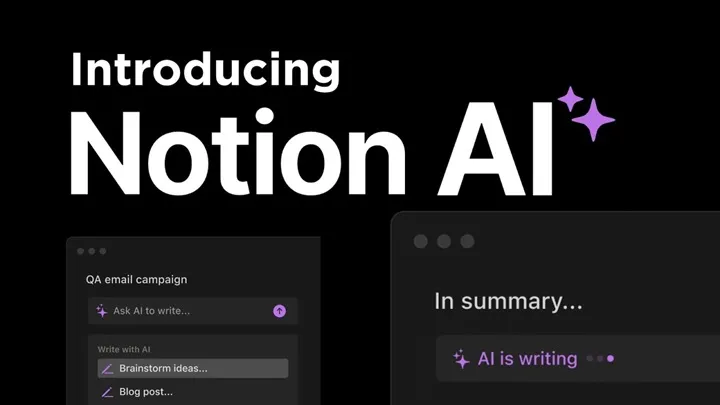
Notion has long been the “all-in-one workspace” for remote teams, but in 2025 its AI integration has matured into something far more dynamic. Instead of being just a note-taking and project documentation tool, Notion AI now acts as an intelligent knowledge partner. It doesn’t just store information—it actively curates, organizes, and retrieves it when needed.
For example, when a team member begins writing a project update, Notion AI can automatically pull in related tasks, past meeting notes, and even forecast potential next steps. This has transformed remote work by eliminating the time wasted on searching for information across scattered files and communication channels. With predictive organization, every employee—whether working asynchronously or across time zones—has access to the right context at the right moment.
2. Slack GPT – AI-Powered Team Communication
Slack remains a cornerstone of remote collaboration, but the addition of Slack GPT in 2025 has pushed it into a new league. Instead of endless channels filled with unfiltered messages, Slack’s AI now acts as a mediator—summarizing discussions, identifying key decisions, and suggesting replies that match the tone and urgency of the conversation.
This change is especially important for remote workers managing information overload. No longer do employees need to scroll through hundreds of messages to find a critical update. Slack GPT extracts what’s relevant, allowing teams to move faster and with greater clarity. In global organizations, it has also become a cultural bridge, helping adapt language and style so communication feels more natural and inclusive.
3. Zoom AI Companion – Next-Level Virtual Meetings
By 2025, video calls are still the backbone of remote collaboration, but Zoom’s AI Companion has redefined what it means to meet virtually. Beyond traditional video conferencing, Zoom now provides real-time transcription, automatic summaries, and intelligent follow-up tasks generated directly from meeting discussions.
Perhaps the most revolutionary feature is real-time translation. Teams spanning multiple continents no longer face language barriers, as Zoom AI ensures that every participant can understand discussions in their native language. This innovation has made collaboration more inclusive and has significantly expanded the reach of multinational businesses. Instead of meetings being a drain, they now become strategic knowledge sessions with immediate, actionable outcomes.
4. Trello AI – Intelligent Task & Project Management
Trello, once known for its simple card-and-board system, has undergone a major evolution with AI. In 2025, Trello AI is no longer a passive task organizer—it actively participates in project management. The system can identify which tasks are likely to face delays, recommend who should take ownership, and even restructure workflows dynamically as conditions change.
For remote managers, this predictive intelligence is invaluable. It reduces the need for constant micromanagement and empowers teams to self-organize. Employees benefit from clearer priorities and fewer bottlenecks, while leaders gain foresight into project health without relying solely on weekly check-ins. Trello AI has shifted the role of project management tools from static trackers to adaptive collaborators.
5. GrammarlyGO – Smarter Communication Across Borders
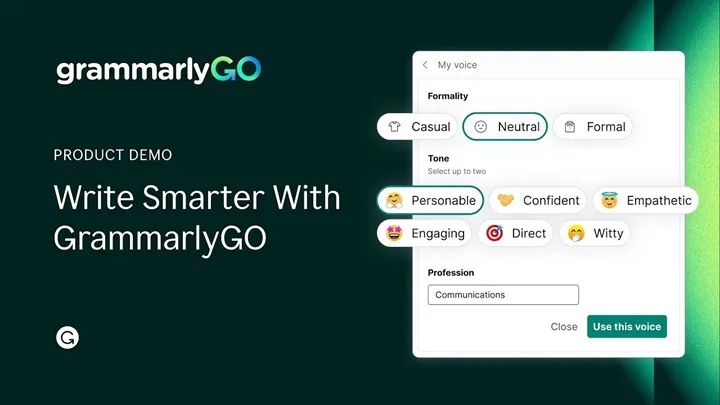
Remote work is built on communication, and GrammarlyGO has become indispensable in 2025. What sets it apart from earlier versions is its ability to generate and refine content with context awareness. Rather than simply catching grammar errors, GrammarlyGO can now draft full emails, reports, and proposals while tailoring tone and style to suit different audiences.
For globally distributed teams, its cultural sensitivity tools are particularly powerful. Miscommunication often arises not from language errors, but from tone mismatches and cultural nuances. GrammarlyGO helps bridge these gaps, ensuring that communication remains professional, empathetic, and effective across diverse regions. This has elevated it from a writing assistant to a vital tool for global collaboration.
6. ClickUp AI – The All-in-One Productivity Hub
ClickUp has positioned itself as the ultimate productivity platform, and by 2025 its AI-powered capabilities have become a game changer for remote organizations. Unlike tools that focus on single aspects of work, ClickUp integrates task management, documentation, time tracking, and performance analytics—all enhanced by AI.
The standout innovation is its ability to generate predictive dashboards. For managers, this means knowing not just what the team is doing today, but also identifying future risks, workload imbalances, and opportunities for optimization. Remote workers benefit from personalized suggestions that align with their productivity patterns, making it easier to stay focused without burning out. ClickUp AI has become the nerve center of remote-first companies.
7. Miro AI – Smarter Virtual Whiteboarding
In 2025, brainstorming doesn’t need everyone in the same room with sticky notes on a wall. Miro AI has transformed virtual whiteboarding into a highly interactive and intelligent experience. Instead of simply hosting digital post-its, Miro now helps generate ideas, clusters them into themes, and converts brainstorming outputs into structured project plans.
This is particularly powerful for remote creative teams, who often struggle to replicate the energy of in-person workshops. Miro AI bridges that gap by actively participating in the process—suggesting connections, refining visuals, and even auto-drawing diagrams. As a result, remote brainstorming sessions now lead directly to action, rather than requiring hours of follow-up organization.
8. Jasper for Teams – Collaborative AI Content Creation
Jasper has expanded beyond being a marketing copy generator to becoming a collaborative AI content hub in 2025. For distributed teams, content creation often becomes fragmented, with different voices and styles clashing. Jasper solves this problem by maintaining consistency while allowing multiple contributors to collaborate seamlessly.
Teams can now co-create campaigns, reports, or creative assets with Jasper acting as both a writer and editor. It ensures that brand voice remains intact across regions while also providing fresh creative input. Remote marketing and communications teams especially value Jasper’s ability to speed up ideation and reduce approval cycles, making content delivery faster and more cohesive.
9. Otter.ai – Smarter Voice Collaboration
Otter.ai has been known for transcription, but in 2025 it has evolved into a comprehensive voice collaboration assistant. Beyond transcribing conversations, Otter now highlights recurring themes, identifies follow-up items, and integrates notes directly into project management tools.
This shift means that remote workers no longer waste time replaying recordings to extract key insights. Instead, Otter distills entire discussions into clear, actionable items. It’s particularly valuable for asynchronous teams—those who can’t attend live meetings—since Otter ensures they can catch up instantly with summaries and task breakdowns.
10. Asana AI – Predictive Work Management
Asana has always been a favorite among remote teams, but its AI advancements in 2025 have turned it into a predictive project management powerhouse. Instead of just tracking deadlines and tasks, Asana AI forecasts delays, identifies dependencies, and suggests resource reallocation before issues escalate.
For leaders managing complex, multi-time-zone projects, this predictive capability is invaluable. Asana AI essentially acts as a virtual project manager, monitoring workflows and flagging potential risks. Remote teams benefit from reduced stress, since they can trust the system to surface problems early and guide them toward solutions. It’s no exaggeration to say Asana AI has become a lifeline for distributed organizations.
Conclusion
The story of remote work in 2025 is one of empowerment. These AI-powered apps are not simply tools—they are collaborators, assistants, and advisors that reduce friction while enhancing creativity and productivity. From Notion AI’s intelligent knowledge curation to Asana AI’s predictive management, each app represents a step toward a more efficient and human-centered way of working.
As the world embraces hybrid and fully remote models, adopting the right AI tools is no longer optional. They are essential for staying competitive, connected, and productive in an increasingly digital-first professional landscape.