







In 2025, navigation apps have evolved into much more than simple digital maps. They now combine AI-driven route optimization, real-time traffic insights, offline capabilities, EV-friendly navigation, and even AR-based directions. Whether you’re commuting daily, traveling across countries, or exploring a new city on foot, having the right navigation app can save you time, money, and stress.
Here’s a closer look at the top 10 navigation apps for 2025, each with unique strengths that make them stand out.
1. Google Maps
Google Maps remains the global leader in navigation apps. In 2025, it uses advanced AI algorithms to predict traffic patterns and suggest the fastest routes, even factoring in historical data for rush hours. The app supports nearly every mode of travel, including walking, cycling, public transport, and driving.
One of Google Maps’ biggest strengths is its integration with local businesses. From finding the best-reviewed restaurants to checking real-time store hours, it functions as both a navigation tool and a local discovery app. The addition of immersive 3D views and AR walking navigation makes it incredibly useful for tourists navigating new cities.
2. Waze
Waze continues to stand out in 2025 with its community-powered navigation system. Unlike traditional apps that rely solely on official traffic feeds, Waze collects real-time data from millions of drivers, providing instant updates on accidents, traffic jams, speed traps, and road closures.
In recent years, Waze has added EV charging station locations, carpooling features, and predictive routing that adapts to your driving habits. This makes it especially popular with commuters who want to avoid congestion and stay one step ahead on busy roads. Its friendly, social-driven design also makes driving more interactive.
3. Apple Maps
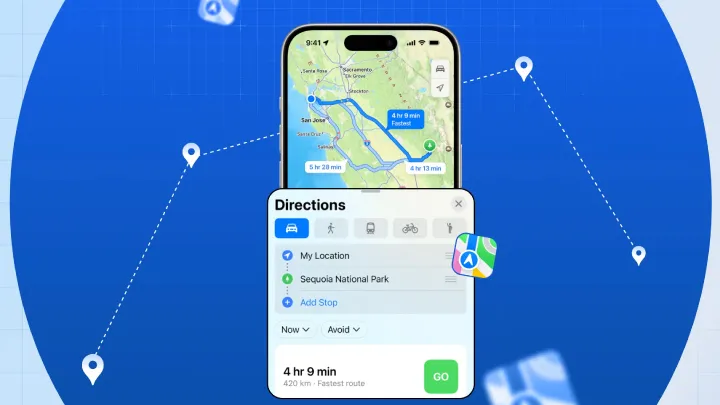
Apple Maps has transformed dramatically since its early struggles. By 2025, it is considered one of the most accurate and visually appealing navigation apps for iOS users. It features 3D city models, immersive turn-by-turn guidance, and augmented reality walking directions that overlay arrows directly onto the real world through your iPhone camera.
Another highlight is Apple’s commitment to privacy-first navigation. Unlike some competitors, Apple Maps processes much of its data on-device, ensuring that personal information stays secure. Combined with seamless integration with iPhone, Apple Watch, and CarPlay, it’s the best option for users deeply embedded in the Apple ecosystem.
4. HERE WeGo
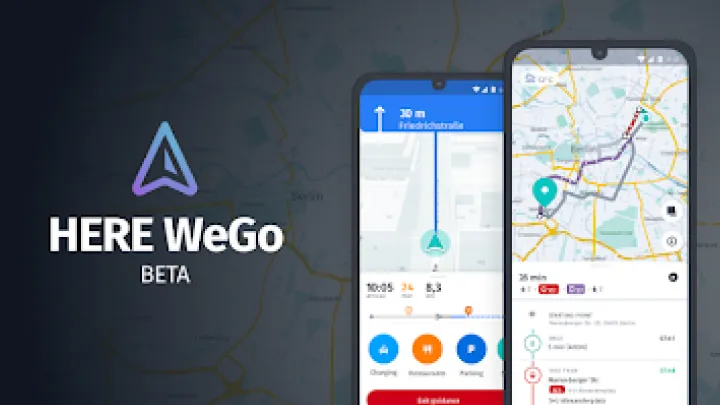
Originally developed by Nokia, HERE WeGo has built its reputation on offline navigation. In 2025, it remains a top choice for travelers who need reliable maps without constant internet access. You can download maps for more than 100 countries and use them offline, making it ideal for road trips and international adventures.
The app also integrates with ride-hailing services, bike rentals, and car-sharing platforms. Recently, HERE WeGo introduced eco-friendly routing, which helps drivers reduce fuel consumption by suggesting energy-efficient paths—an important feature as more drivers adopt electric and hybrid vehicles.
5. Citymapper
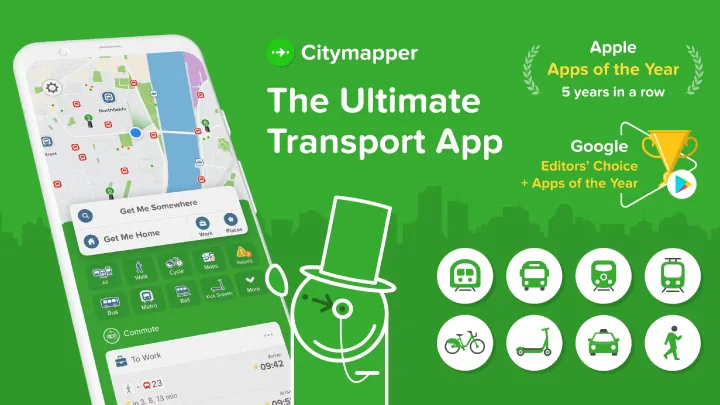
Citymapper is the go-to app for navigating complex urban environments. It provides real-time public transportation schedules across buses, subways, trains, trams, ferries, and even shared bikes and scooters. By combining multiple forms of transportation into a single route, Citymapper helps users move around big cities efficiently.
In 2025, the app has expanded its reach to more cities worldwide and now includes ticket purchasing, ride-hailing integration, and live service alerts. Tourists love it for its simplicity, while commuters rely on its ability to show the fastest multimodal routes during rush hour.
6. MapQuest
MapQuest, one of the pioneers in digital navigation, still maintains relevance in 2025 with its straightforward and reliable driving directions. Its biggest strength lies in fuel price tracking and cost estimation, which helps drivers save money on long trips.
The app is lightweight and easy to use, making it appealing for users who want simple navigation without the complexity of newer apps. It may not be as feature-rich as Google Maps, but it remains a dependable option for road travelers in North America.
7. Sygic
Sygic has positioned itself as the premium offline navigation solution. It offers maps of over 200 countries and advanced features such as augmented reality navigation, lane assistance, and a head-up display (HUD) mode that projects directions onto your windshield.
In 2025, Sygic has enhanced its driver safety tools, including speed limit warnings, dashcam functionality, and EV routing for electric cars. It is widely used by professional drivers, long-distance travelers, and those who prefer offline reliability over cloud-based navigation.
8. MapFactor Navigator
MapFactor Navigator uses OpenStreetMap (OSM) data, making it a community-driven alternative to commercial apps. The maps can be downloaded and updated for free, which is a huge advantage for those traveling to areas with poor connectivity.
The app supports multiple vehicle types, from cars and trucks to pedestrians and cyclists. Its no-frills design appeals to users who want a lightweight, efficient, and offline-first navigation tool without unnecessary extras.
9. Navmii
Navmii combines voice-guided GPS navigation with offline mapping. It covers more than 150 countries and integrates real-time traffic, hazard reports, and speed limit alerts. Unlike some mainstream apps, Navmii is designed to function smoothly even on older devices.
In 2025, the app has expanded its community-based reporting features, making it easier for users to share road updates. It’s especially popular among travelers looking for an alternative to Google Maps that still offers global coverage.
10. MapmyIndia
For users in India, MapmyIndia is the top choice. It offers detailed hyperlocal mapping, real-time traffic updates, and highly accurate points of interest tailored to Indian cities and highways. Unlike global apps, it understands the unique road conditions and traffic patterns of the region.
MapmyIndia has also invested in EV navigation, digital addressing systems, and location-based services, making it not only a navigation app but also a platform for businesses and logistics in India. For anyone traveling within the country, it’s the most reliable option.
Conclusion
Navigation apps in 2025 are smarter, faster, and more versatile than ever. Whether you need global coverage with Google Maps and Sygic, community-driven updates with Waze and Navmii, or city-focused navigation with Citymapper, there’s a perfect app for every traveler.
The best choice ultimately depends on your lifestyle—urban commuter, frequent road-tripper, international traveler, or local explorer. With these 10 apps, navigating the world in 2025 has never been easier.