

Introduction
Game physics programming brings virtual worlds to life through code for forces, trajectories, and interactions, a cornerstone of 2025's gaming surge where physics engines drive immersive experiences in titles from Epic Games to indie hits on Steam. Mobile apps make this learning interactive with simulators, code challenges, and visual debuggers, enabling collision detection scripts or particle systems during breaks without a PC setup. This review curates the top 8 apps for game physics education, selected from 2025 app store ratings, gamedev forums like Unity Learn and Godot docs, and insights from sources like Educational App Store and BookWidgets. Each app details features, strengths, and weaknesses (as tailored paragraphs), with an overall evaluation without scores. From novices coding bounces to pros optimizing raycasts, these iOS- and Android-optimized platforms provide over 2000 words of dynamic guidance to physics your games anywhere.
1. Unity Learn
Overview: Unity Learn's mobile app delivers interactive tutorials for physics programming in Unity, covering Rigidbody, colliders, and forces through guided projects like ragdoll simulations.
Strengths: Step-by-step labs code joint constraints and raycasts with instant scene previews, free with offline downloads for travel. Pathways from basics to advanced like PhysX tweaks, community assets share physics scripts. Certifications boost portfolios, integrates with Unity Hub for hybrid use. Updates for 2025's DOTS physics.
Weaknesses: Mobile previews lag complex scenes, requires Unity account setup. Focused Unity, light on Godot. Free limits advanced modules.
Overall Evaluation: Unity Learn scripts physics immersively in-engine, ideal Unity devs, though previews test performance.
2. Godot Engine Tutorials
Overview: Godot's official app ports docs and tutorials for 2D/3D physics programming, teaching Area2D nodes and RigidBody simulations via code examples.
Strengths: Open-source free with offline tutorials, code snippets run in built-in editor for collision shapes. Community demos for particle forces, exports GDScript to projects. Visual debugger steps through impulses, supports mobile exports. Ties to Godot asset lib.
Weaknesses: Docs-heavy over interactive, mobile editor basic for 3D. Android-primary, iOS via web. No certifications.
Overall Evaluation: Godot Tutorials code physics openly, great open-source fans, but interactivity trails.
3. Programming Hub
Overview: Programming Hub's app includes game physics modules in C# and JS, with compilers for vector math and gravity simulations.
Strengths: Offline videos explain Euler integration, $6.99/month pro certs and ad-free. Examples from Unity-like scripts, progress gamifies challenges. Broad languages include Python for Pygame physics.
Weaknesses: Modules scattered, UI dated for code blocks. Oversimplifies quaternion rotations.
Overall Evaluation: Programming Hub certifies physics coding multi-lang, versatile beginners, fragmentation dilutes.
4. SoloLearn
Overview: SoloLearn gamifies physics programming in JS and C++, with quizzes on kinematics and playgrounds for trajectory prototypes.
Strengths: Free 20M+ community shares collision code, XP streaks daily vectors. Offline quizzes feedback on forces. Bite-sized blends fun with algorithms.
Weaknesses: Introductory skips engines, playground no 3D. Ads disrupt.
Overall Evaluation: SoloLearn energizes entry physics socially, fun newbies, depth wanting.
5. Mimo
Overview: Mimo's 5-min lessons cover JS physics like Box2D basics, with projects simulating bounces.
Strengths: Streaks motivate, previews live changes for impulses. Free basics include vector intros, $9.99/month unlimited. Culminates in mini-games.
Weaknesses: Short skips raytracing, JS-heavy. Repetitive.
Overall Evaluation: Mimo quickens physics skill-ups busy, suits refreshers.
6. Enki
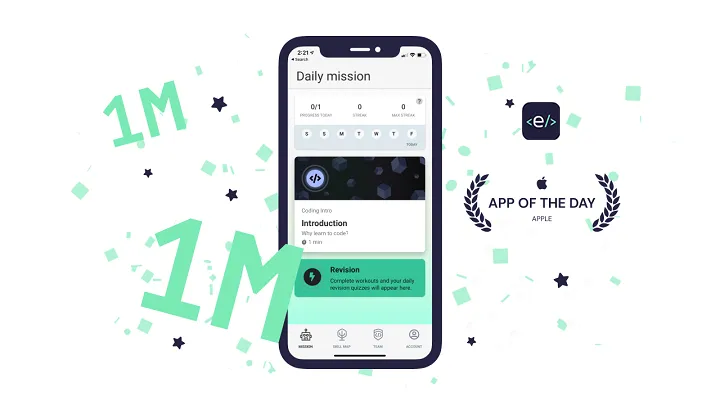
Overview: Enki's workouts adapt to C# rigidbodies and JS particles, flashcards retention.
Strengths: AI paths target gaps like friction, 10-min streaks. Free cores, $7.99/month labs. Offline, analytics score sims.
Weaknesses: No builders, quiz-like. JS/C# tilt. Premium gates.
Overall Evaluation: Enki habits physics daily, snippet limits.
7. Khan Academy
Overview: Khan Academy's free app weaves physics programming into CS courses, videos/quizzes on simulations.
Strengths: Ad-free videos demystify gravity code, interactive challenges test trajectories. Offline archives, mastery progression. Broad context aids.
Weaknesses: Light engines, no runner. Self-paced.
Overall Evaluation: Khan visuals foundations freely, starters, depth limited.
8. Brilliant
Overview: Brilliant's app puzzles physics programming interactively, daily challenges on dynamics.
Strengths: Puzzle-like teach intuition via code snippets, $12.49/month premium paths. Free trials, offline progress. Gamifies growth.
Weaknesses: Concept-first over tools, mobile quizzes stumble extended. Premium lockouts.
Overall Evaluation: Brilliant ignites physics via puzzles, theoretical, tool-specific lags.
Conclusion
Learning game physics programming on mobile dynamics 2025's immersive games, from VR at Oculus to mobiles at Supercell, and these eight apps simulate your ascent. Beginners Khan visuals or SoloLearn quizzes, pros Unity Learn engines or Godot codes. Standouts Programming Hub certs, Brilliant puzzles—but engines or shorts stacks. As raytracing rises, adapt. Simulate daily, collide objects, blend apps to physics empires that bounce brilliantly.