

Introduction
Strategy games have always been the crown jewel for players who love using their intellect, foresight, and creativity to achieve victory. Unlike action titles that rely heavily on reflexes, or casual games designed for quick entertainment, strategy games reward patience, long-term planning, and adaptability. They challenge players to think like generals, politicians, or rulers, often forcing them to anticipate their opponents’ moves several steps ahead. For masterminds who thrive on tactical brilliance and complex decision-making, strategy games offer a playground unlike any other.
What makes strategy games so compelling is their ability to simulate real-world decision-making while maintaining a sense of fun and engagement. They allow players to build civilizations, command armies, manipulate economies, and even rewrite history itself. In these virtual arenas, victory is not determined by brute strength alone but by the ability to weigh options, manage resources, and execute flawless plans under pressure. For this reason, the genre has stood the test of time, attracting millions of players who crave intellectual battles as much as digital triumphs.
Age of Empires II: The Timeless Classic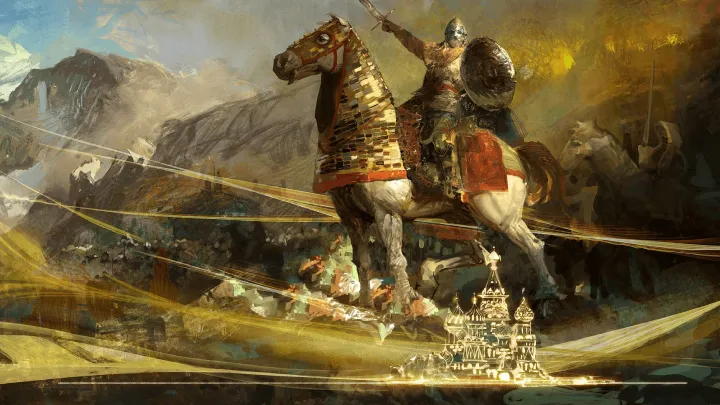
When it comes to iconic strategy games, Age of Empires II is one of the most enduring and beloved titles in the history of gaming. Released in 1999 by Ensemble Studios, this real-time strategy (RTS) masterpiece transported players to the medieval era, where they could command civilizations ranging from the Britons to the Mongols. More than two decades later, the game continues to thrive thanks to expansions, remasters, and a passionate community that refuses to let it fade away.
At its core, Age of Empires II is about building and balancing. Players must gather resources—food, wood, gold, and stone—while expanding their towns, training military units, and defending against enemy aggression. Unlike many modern games that guide players step by step, AoE II forces players to juggle dozens of priorities at once: expanding the economy, advancing through the Ages, scouting the map, and planning military campaigns. Success requires both micro-level precision in managing villagers and units, and macro-level foresight in long-term strategy.
StarCraft II: The Ultimate Test of Skill
If Age of Empires II is about variety and historical charm, StarCraft II is about precision, speed, and pure tactical warfare. Released in 2010 by Blizzard Entertainment, this RTS title quickly became one of the most competitive games in the world, dominating the eSports scene for years and earning a reputation as the ultimate test of strategic brilliance.
StarCraft II is set in a futuristic universe where three distinct factions—the human Terrans, the insect-like Zerg, and the psionic Protoss—clash in an endless struggle for dominance. Each faction plays radically differently: Terrans rely on flexibility and adaptability, Zerg overwhelm with sheer numbers and fast production, and Protoss unleash powerful but expensive units that can devastate unprepared foes. Mastering just one race is challenging enough; mastering all three is a feat worthy of a true strategist.
Civilization VI: Building an Empire That Stands the Test of Time
Few strategy games capture the grand sweep of human history as well as Civilization VI. Released in 2016 by Firaxis Games, this turn-based 4X strategy game puts players in control of a civilization from the ancient era to the modern age. The goal is not merely to survive but to thrive—expanding territory, advancing technology, waging wars, engaging in diplomacy, and shaping the world in your image.
What sets Civ VI apart is the freedom it gives players to define what victory means. A mastermind can pursue different win conditions: cultural dominance through great works of art, scientific advancement by reaching the stars, military conquest by overwhelming rivals, or diplomatic superiority through global cooperation. Each path requires long-term planning and careful balancing of resources, making it a true test of foresight and adaptability.
One of the game’s most innovative features is its district system. Unlike earlier entries, where cities built improvements within their borders abstractly, Civ VI forces players to physically place districts—like campuses, industrial zones, or holy sites—on the map. This change adds a layer of spatial strategy, forcing players to weigh geography, adjacency bonuses, and city specialization. It transforms city-building into a puzzle, where every decision can have far-reaching consequences.
The AI opponents in Civ VI also present unique challenges. Each leader has distinct personalities, agendas, and historical quirks. Cleopatra might reward alliances with powerful militaries, while Gandhi—infamous in the series for his paradoxical aggression—might surprise you with nuclear ambitions. Dealing with these personalities requires not just brute force but also diplomatic finesse, reading intentions, and exploiting rivalries to your advantage.
For masterminds, Civilization VI offers the thrill of omniscient control. Every decision, from founding your first city to launching satellites into orbit, contributes to a grand narrative of progress and ambition. Games often last dozens of hours, with victories feeling like the culmination of centuries of careful planning. For those who enjoy playing the long game, Civ VI is a masterpiece of strategic depth.
Total War: Three Kingdoms – Blending War and Politics
The Total War franchise has always excelled at combining large-scale battles with deep empire management, but Total War: Three Kingdoms (2019) brought the formula to new heights. Set in China’s legendary Three Kingdoms era, this game gives masterminds the chance to step into one of history’s most turbulent and romanticized periods, commanding heroes, armies, and entire dynasties in a struggle for supremacy.
The game is unique because it seamlessly blends two different styles of strategy. On the campaign map, players manage cities, build economies, and engage in diplomacy, much like a traditional grand strategy game. But when armies clash, the game zooms in to a real-time battlefield where thousands of soldiers fight under the command of generals. This dual-layered approach makes Three Kingdoms a playground for masterminds who love both macro- and micro-level strategy.
A key innovation in Three Kingdoms is the introduction of the “guanxi” system, inspired by Chinese philosophy of relationships. Every general has their own personality traits, ambitions, and rivalries. Some generals may thrive when paired together, while others may clash and destabilize your armies. This forces players to think not only about military tactics but also about human psychology and politics. Choosing the right advisors or generals becomes as crucial as choosing the right battlefield tactics.
The battles themselves are breathtaking and deeply tactical. Terrain, weather, morale, and formation all play major roles in determining outcomes. Players can unleash legendary duels between iconic figures like Lu Bu and Guan Yu, which add cinematic drama while also carrying strategic weight. These duels are not just for show—they can turn the tide of battle if leveraged wisely.
For masterminds, Total War: Three Kingdoms is the perfect fusion of chess-like diplomacy and action-packed warfare. It rewards players who can think like emperors—balancing alliances, managing internal politics, and planning decisive strikes at the right moment. Its combination of political intrigue and epic clashes makes it one of the most sophisticated strategy games of the modern era.
XCOM 2: Surviving Against the Odds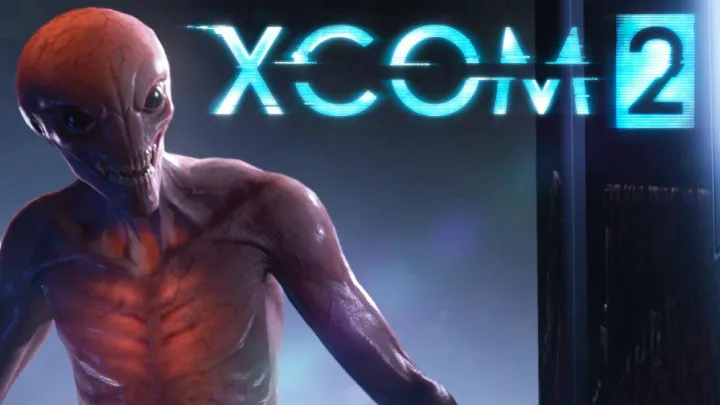
If other strategy games make you feel like a ruler or general, XCOM 2 (2016) makes you feel like the underdog commander of humanity’s last hope. Developed by Firaxis, this turn-based tactical game is set in a dystopian future where aliens have conquered Earth. As the leader of the resistance, your task is to rally soldiers, fight impossible battles, and gradually turn the tide against a technologically superior foe.
At the heart of XCOM 2 is its squad-based combat. Missions play out on grid-based maps where players move soldiers, take cover, and engage in firefights with alien forces. Every choice carries weight: whether to advance cautiously, risk a flanking maneuver, or sacrifice one soldier to save the rest. The game’s infamous RNG system—where even a 95% chance to hit can still fail—adds unpredictability, forcing players to plan for contingencies and adapt when things go wrong.
Conclusion
Strategy games are more than just entertainment—they are intellectual battlegrounds where every decision can alter the course of history, reshape a battlefield, or secure the future of an empire. Unlike many genres that rely on speed or reflexes, strategy games demand something deeper: patience, foresight, creativity, and the ability to adapt under pressure. They reward masterminds who can think several moves ahead, balancing short-term gains with long-term goals, and who thrive in complexity rather than shy away from it.
From the medieval clashes of Age of Empires II to the interstellar duels of StarCraft II, from the empire-building grandeur of Civilization VI to the tense tactical survival of XCOM 2, each title on this list showcases a different facet of strategic mastery. Some test your ability to multitask in real time, while others give you the luxury of turn-based contemplation. Some immerse you in political intrigue and diplomacy, while others pit you against impossible odds where every soldier’s life matters. Yet all of them share a common thread: they challenge your mind as much as your reflexes.