


Since its global launch in 2020, Riot Games’ Valorant has transformed into one of the most influential tactical shooters of its generation. Blending precise gunplay with unique agent abilities, the game carved a unique identity in the competitive esports space. Now in 2025, Valorant is no longer just a rising star; it is a household name in gaming. This year has already brought major updates, and Riot has outlined even more changes that are set to redefine how the game is played.
The 2025 updates touch every corner of Valorant: new agents, overhauled maps, balancing changes, esports integrations, and even technological advancements like AI-driven coaching tools and anti-cheat improvements. For both casual players and professional competitors, these updates will change the pace and strategies of the game.
This feature dives deep into all the latest news about Valorant in 2025, analyzing how the updates affect gameplay, esports, and the broader community.

A New Year, A New Meta
Valorant thrives on the idea of constant evolution. Riot’s development team has always made it clear that they do not want the game to remain stagnant, and 2025 is perhaps the boldest step forward yet.
A Shift in Agent Dynamics
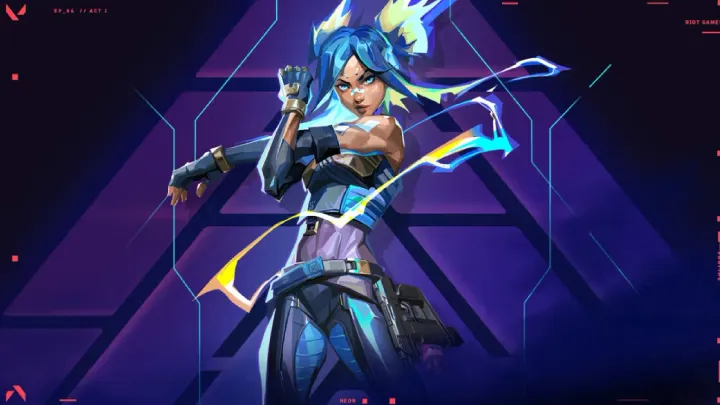
The biggest highlight of the year has been the introduction of two new agents: Spectra, a controller who manipulates sound to disorient enemies, and Kairo, a sentinel with time-based mechanics. Spectra’s ability to create zones of muffled audio makes it harder for enemies to coordinate, while Kairo can delay spike detonation or slow enemy movement in strategic areas. Both agents force players to rethink existing strategies, adding layers of unpredictability.
Existing agents also received updates. Jett, who was once considered too dominant in competitive play, has been rebalanced. Her dash now requires more tactical commitment, while her ultimate received minor adjustments to encourage precision rather than spam. Killjoy and Cypher, on the other hand, received buffs to ensure that sentinel players can counteract the hyper-aggressive metas that dominated late 2024.
Weapon Balancing and Economy Changes
In 2025, Riot introduced adjustments to the in-game economy to prevent snowballing in competitive matches. Pistols have been slightly buffed, encouraging eco-round creativity, while rifles like the Phantom and Vandal remain the backbone of mid-to-late game strategies.
The Operator sniper rifle, long a source of community debate, has been fine-tuned once again. Its cost has been reduced slightly, but movement penalties have been increased, making it powerful in the right hands but punishing for careless positioning.
Map Overhauls and New Battlefields
Maps have always been central to Valorant’s identity, blending Counter-Strike-style lanes with creative agent-driven dynamics. In 2025, Riot has doubled down on its commitment to maps as narrative and tactical tools.
Brand-New Map: Citadel
The first major addition of the year is Citadel, a futuristic fortress set in an oceanic city. The map introduces verticality like never before, with elevators and moving platforms that agents can use to reposition dynamically. Unlike traditional Valorant maps, Citadel features shifting barriers during the match, changing chokepoints in real-time. This mechanic has already sparked heated debates among pros, as it rewards adaptability but increases unpredictability.
Revamped Classics
Older maps like Bind and Split have received major facelifts. Bind now includes new teleportation mechanics, while Split has been expanded with additional pathways to reduce choke-heavy gameplay. Players have praised these updates for making the maps feel both familiar and fresh.
Icebox, often criticized for being too complex, has been simplified with cleaner sightlines and fewer vertical stacking opportunities, making it friendlier for new players while maintaining its strategic depth for veterans.
Competitive Integrity and Anti-Cheat 2.0
One of the most significant updates of 2025 is Riot’s Vanguard Anti-Cheat 2.0. After years of battling cheaters, Riot has integrated machine learning into its system, allowing real-time detection of suspicious patterns. Players now receive immediate notifications when cheaters are banned from their matches, creating more trust in the competitive ecosystem.
Additionally, Riot has introduced a smurf-detection system that uses behavioral data to identify and separate high-skill players creating low-level accounts. This has drastically improved matchmaking fairness, reducing frustration for new players.
Esports: Valorant Champions Tour 2025
Valorant has become a pillar of modern esports, and 2025 is shaping up to be the game’s biggest competitive year yet.
Regional Restructuring
The Valorant Champions Tour (VCT) has undergone a structural overhaul. Instead of scattered regional leagues, Riot introduced a tiered global system with Premier Leagues in North America, Europe, Asia-Pacific, and Latin America. These leagues culminate in intercontinental playoffs leading to Valorant Champions, the ultimate world championship.
AI Coaching and Analytics
Esports teams now have access to Riot’s new AI coaching tools, which analyze matches in real time. These tools break down player movement, ability usage, and economic decisions, offering insights that human coaches might miss. This has sparked conversations about whether the game risks becoming too data-driven, but many believe it elevates competitive standards.
Player Stories and Rising Stars
2025 has also seen the rise of new faces in Valorant esports. Young talents from Southeast Asia and the Middle East have broken onto the international stage, bringing fresh playstyles and challenging the dominance of traditional regions like North America and Europe. These underdog stories add a new layer of excitement to the global scene.
Community Engagement and Creative Modes
Valorant is not only about esports. Riot continues to expand its community-driven content, ensuring that casual players remain engaged.
Valorant Creative Mode
A long-requested feature, Creative Mode, was finally released in 2025. Similar to Fortnite’s sandbox, this mode allows players to design their own maps, practice scenarios, and custom game modes. Already, fans have built training arenas, parkour challenges, and even narrative-driven missions. Riot has promised to showcase the best community creations in official playlists.
Seasonal Events and Skins
The cosmetics market continues to thrive, with 2025 introducing interactive skins that respond to player performance. For example, the “Aurora Vandal” glows brighter as the player secures kills, while the “Chrono Phantom” displays shifting time effects with each reload.
Seasonal events have also become more elaborate, with crossover themes involving Riot’s broader universe, including League of Legends and Arcane. These collaborations have strengthened the connection between Riot’s games and kept fans invested across multiple franchises.
Technological Advancements
Valorant is not just evolving in gameplay, but also in technology.
Performance Upgrades
In 2025, Riot optimized Valorant for next-gen hardware, ensuring smoother performance on high-refresh monitors and expanded support for ultrawide setups. This update has been welcomed by competitive players who rely on every frame for precision.
Cloud Gaming and Mobile Expansion
Valorant Mobile, announced years ago, is finally in open beta across several regions. Riot has promised full cross-progression, meaning players can switch between mobile and PC without losing progress. Additionally, cloud gaming support ensures that Valorant can be streamed on devices with minimal hardware, expanding its reach to millions more players worldwide.
The Future of Valorant Beyond 2025
While 2025 is already filled with groundbreaking updates, Riot has teased what lies ahead. Developers hinted at the possibility of a campaign mode blending Valorant’s lore with playable missions, similar to how Overwatch introduced PvE experiences.
There is also speculation that Riot may experiment with co-op raid-style content, allowing squads to tackle narrative-driven missions against AI enemies. This could further diversify Valorant beyond the 5v5 competitive formula.
Conclusion
The year 2025 represents a turning point for Valorant. With bold updates to agents, maps, technology, esports, and community features, the game is not just maintaining its relevance—it is setting new standards for tactical shooters. Riot’s commitment to balancing competitive integrity with casual accessibility ensures that Valorant appeals to a wide range of players, from esports professionals to casual fans experimenting in Creative Mode.