


When Zoonomaly first emerged as an indie experiment in atmospheric survival-horror, few expected it to evolve into a cultural phenomenon. What began as a strange blend of creature simulation and psychological tension has transformed into a living world that continues to grow. Now, in 2025, the game stands at a pivotal moment: playground-sized updates, renewed community interest, and an ambitious roadmap are reshaping its future. This feature looks closely at the newest developments, what they mean for players, and why Zoonomaly continues to matter in an increasingly crowded survival gaming landscape.
1. The State of Zoonomaly Entering 2025
By the end of 2024, Zoonomaly had already developed a loyal player base, celebrated for its eerie environments, unpredictable animal behavior, and the constant tension between survival and exploration. Players were not merely hunting or avoiding predators; they were being studied by the anomalies themselves, creating a uniquely unsettling feedback loop.
The developers entered 2025 with promises of expanded content, tighter mechanics, and a commitment to listening to community feedback. With survival-horror continuing its resurgence in the wider gaming industry, the stakes for Zoonomaly could not be higher.
2. Major 2025 Update: The Echoes Expansion
The most significant update of the year arrived in March 2025 with the release of Zoonomaly: Echoes. Rather than introducing only cosmetic changes or a handful of missions, this expansion fundamentally altered how players experience the world.
The headline feature was the addition of a new region known as The Hollow Reserve. Unlike earlier maps, which emphasized wide-open forests and decayed research facilities, The Hollow Reserve leaned into claustrophobic wetlands and dense animal corridors. Sound played a far more crucial role, with distant cries and distorted calls guiding or misleading players through the fog.
Echoes also introduced a mechanic that fans had been requesting since the game’s early access days: the adaptive anomaly AI. Instead of relying solely on scripted patterns, creatures began to respond in ways that reflected long-term player behavior. If a player consistently relied on noise traps, predators would eventually learn to ignore them. If hiding was the preferred strategy, anomalies would begin sweeping areas more aggressively. This learning mechanic added a new layer of paranoia and depth.
Players praised the ambition but admitted that the learning AI forced them to abandon comfort strategies they had spent months perfecting. Forums quickly filled with guides on how to “untrain” anomalies by deliberately varying tactics, showing how deeply the system affected player psychology.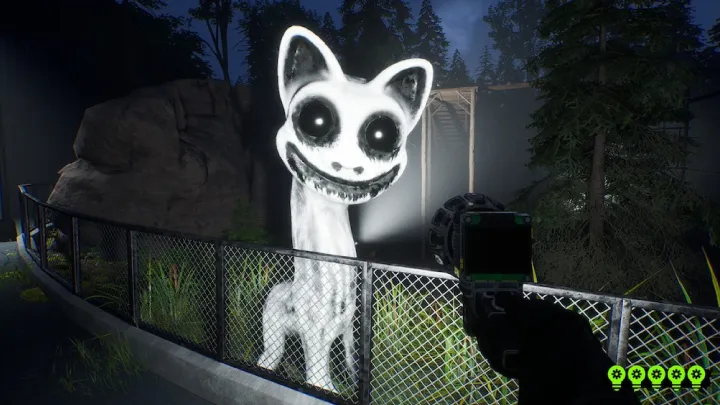
3. Technical Overhaul: Performance and Accessibility
Beyond the dramatic gameplay shifts, 2025 also brought a complete overhaul of the game’s technical backbone. Prior to this year, many players had complained about frame rate drops, occasional crashes in larger environments, and an interface that lacked accessibility options for different play styles.
In January, a patch addressed most of these concerns. The game’s engine was re-optimized, delivering smoother performance on mid-tier hardware without sacrificing visual fidelity. The update also brought a fully reworked HUD that could be customized in granular detail. Players who wanted a minimalist survival experience could strip away nearly all indicators, while newcomers could enable more guided cues without breaking immersion.
The accessibility improvements drew particular praise. Subtitles were refined, colorblind modes expanded, and input remapping became more versatile. For a game known for its haunting soundscapes and visual tricks, ensuring that players with different needs could still immerse themselves was a vital step forward.
4. Expanding the Story: New Lore and Narrative Layers
Zoonomaly’s appeal has always rested as much in mystery as in mechanics. For years, players pieced together scraps of lore through environmental storytelling, journals, and cryptic audio recordings. In 2025, the developers leaned deeper into narrative delivery, weaving in new lore entries that shed light on the origins of the anomalies.
The Echoes expansion featured hidden research logs scattered across The Hollow Reserve, each hinting at a failed experiment that blended animal instincts with an otherworldly intelligence. While the game stops short of giving full answers, the implications are chilling: the anomalies may not be creatures born of nature, but engineered hybrids designed to study humans.
This narrative thread generated heated debate among fans. Some loved the gradual drip-feed of answers, while others argued that too much exposition could ruin the mystery. Yet regardless of opinion, the updates ensured that players kept theorizing, writing fan essays, and even creating video documentaries dissecting the smallest environmental details.
5. Community Response: A Divided But Passionate Base
With every major update, the Zoonomaly community becomes more vocal. The 2025 content drop was no exception. On social platforms, forums, and Discord servers, players debated whether the adaptive AI enhanced or sabotaged the survival experience.
Veteran players often praised the new systems for injecting unpredictability into the game, likening it to playing a horror title that constantly rewrote its own rules. Others, particularly more casual players, found the changes overwhelming, arguing that the anomalies now felt unfair rather than scary.
What united both sides, however, was passion. Even those critical of the changes admitted they cared enough about Zoonomaly to argue, analyze, and suggest solutions. Unlike many games that fade into silence after a divisive update, Zoonomaly thrived on its community’s noise.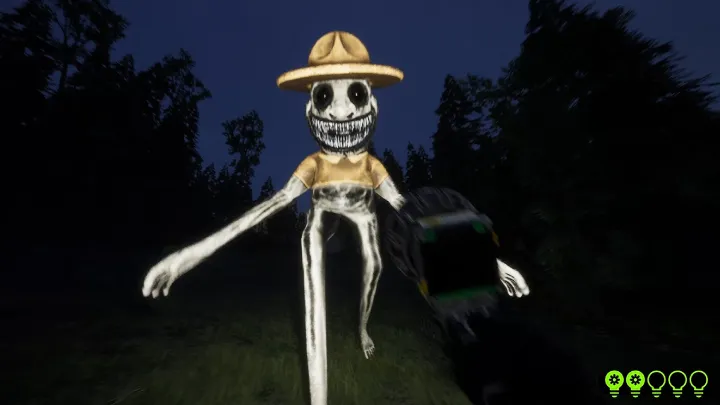
6. Developer Transparency and Communication
One factor that continues to earn goodwill is the developer team’s transparency. Throughout 2025, the studio published monthly dev diaries outlining patch notes, behind-the-scenes design challenges, and previews of upcoming features. These posts often addressed community criticism head-on, acknowledging missteps while explaining the reasoning behind certain decisions.
For instance, when players complained about the AI being “too adaptive,” developers revealed the exact parameters of how anomalies learned behavior. They then rolled out a tuning patch that introduced difficulty sliders for adaptive intelligence, allowing players to choose whether they wanted anomalies to evolve slowly, rapidly, or not at all.
This level of communication not only calmed frustrations but also gave players a sense of ownership over the game’s direction. In an era where many live-service titles struggle with player trust, Zoonomaly’s openness stands out.
7. The Rise of Creative Playstyles
Interestingly, 2025 also saw the rise of unconventional playstyles fueled by the updates. Some players began experimenting with “pacifist runs,” trying to survive without harming anomalies at all. Others pushed the boundaries of the adaptive AI by creating bizarre strategies designed to confuse it—such as intentionally making noise in patterns or leading anomalies in circles until they “forgot” behaviors.
YouTube and Twitch content creators leaned heavily into these experiments, producing viral videos that showcased just how unpredictable the systems had become. This boosted the game’s visibility, drawing new audiences intrigued by the emergent stories.
In many ways, the updates unintentionally turned Zoonomaly into a sandbox for creative survival, proving that the horror genre can support far more than simple fight-or-flight dynamics.
8. Multiplayer Enhancements and Social Tension
While Zoonomaly began as a primarily solo experience, its cooperative mode has steadily grown. The 2025 updates introduced several new features designed to intensify group play. Voice detection mechanics now allowed anomalies to react to in-game chat, forcing players to whisper or risk alerting predators. Shared resource systems created difficult moral dilemmas: should one player hoard supplies to ensure their survival, or spread them thin to keep the group alive?
These changes sparked some of the most memorable multiplayer stories of the year. Groups reported betrayals, accidental sacrifices, and tense standoffs over dwindling food or shelter. Critics described these moments as “emergent horror theater,” where the scariest element was often not the anomaly but the choices of fellow survivors.
9. Competitive Scene and Unintended Esports Potential
Another surprising development in 2025 was the rise of a competitive Zoonomaly scene. While the game was never designed for esports, some players organized unofficial tournaments where participants competed to survive the longest or complete objectives under harsh conditions.
The adaptive AI became both a challenge and a spectacle. Audiences watched in fascination as anomalies countered strategies live, creating unpredictable showdowns. Although still niche, these events hinted at the game’s potential beyond its survival-horror roots.
The developers have not officially embraced competitive play, but they acknowledged its popularity by adding custom settings for private matches, giving organizers more control over rules and pacing.
10. Looking Ahead: The Future of Zoonomaly
As 2025 progresses, the question looms: where does Zoonomaly go from here? The developers have teased another expansion slated for late in the year, rumored to introduce urban environments where anomalies blend into abandoned cities. This shift could dramatically alter gameplay, forcing players to survive not only in natural reserves but also in decaying human-made structures.
Beyond content, the roadmap hints at even deeper narrative integration, with decisions potentially altering world states across multiple playthroughs. If executed well, this could cement Zoonomaly as one of the most dynamic survival games of its generation.
For now, the game remains a fascinating case study in ambition. Its updates are bold, sometimes divisive, but always engaging. In an industry where predictability can dull even the most polished titles, Zoonomaly thrives by refusing to sit still.
Conclusion
Zoonomaly in 2025 is not a perfect game. Its adaptive AI pushes some players to the brink, its lore teases without always satisfying, and its technical changes sometimes overcomplicate. But it is undeniably alive. Every update shifts the experience in meaningful ways, and the community’s endless debates prove that the game continues to matter.
As survival-horror fans look for the next title to unsettle and challenge them, Zoonomaly stands tall as a reminder of what happens when developers dare to experiment. In the Hollow Reserve’s fog, in the echo of a predator’s call, players are reminded that horror is not just about fear—it is about adaptation, resilience, and the unknown that waits just ahead.